
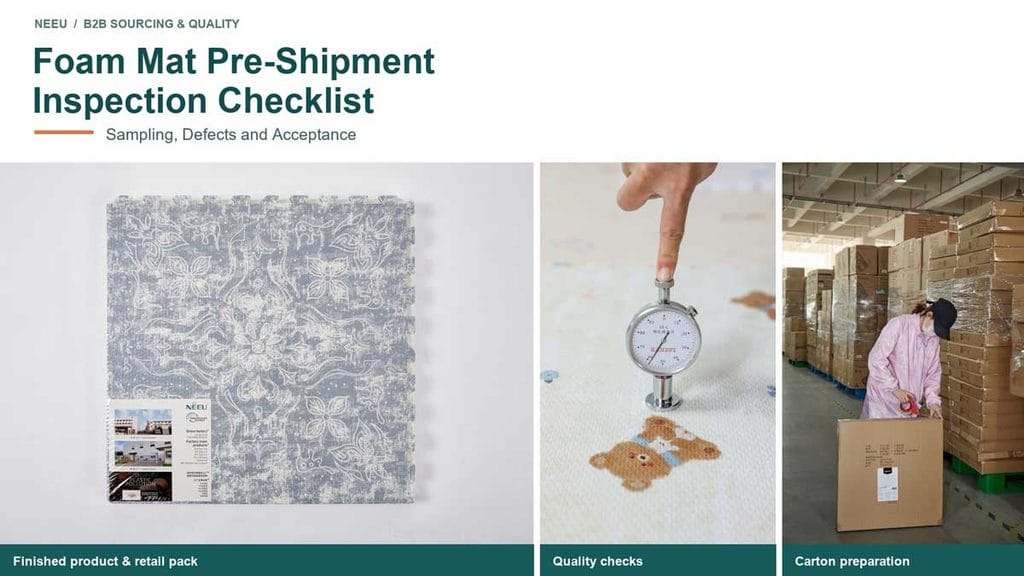
The cartons are ready, the vessel booking is approaching, and the supplier has sent photographs of neatly packed mats. The buyer still needs to answer a different question: does the identified shipment meet the requirements agreed before production?
A foam mat pre-shipment inspection checks finished goods against the approved specification, using a defined sampling and acceptance plan. It should cover product identity, quantity, appearance, dimensions, assembly, packaging, and the evidence required for release. The result should identify which goods were inspected, what was found, and who can authorize shipment.
Pre-shipment inspection at a glance

Use these seven checkpoints to organize the visit. The inspection plan supplies the sample sizes and acceptance criteria for each applicable check.
| Checkpoint | Main question | Evidence to retain |
|---|---|---|
| Product identity and quantity | Are the presented goods the correct order and revision? | SKU, lot IDs, carton count and sampled pack contents |
| Sample selection | Which goods were available, and how were samples chosen? | Selection record, sample IDs and access limitations |
| Dimensions and assembly | Do mats meet the specified measurements and fit requirements? | Individual readings, conditioning details and assembled-set results |
| Appearance and surface | Do faces, edges, colors and graphics match the approved criteria? | Classified findings and photographs linked to units |
| Packaging | Are the retail packs and shipping cartons complete and correct? | Labels, decoded barcode data, accessories and pack condition |
| Supporting reports | Is required test evidence available and applicable? | Report IDs, product scope and outstanding checks |
| Release decision | Can the identified lot ship, or must it be held? | Inspection result, corrective actions and authorized decision |
Before the inspector arrives
Final inspection is too late to negotiate the basic thickness tolerance or decide which artwork was approved. The inspector needs the current specification, drawings, approved reference, packaging files, and written deviations together. The foam mat sample approval checklist explains how to establish that reference before mass production.
For this inspection, add the purchase order, SKU quantities, production-lot list, packing list, and the agreed inspection plan. Identify the person who can resolve a disputed requirement and the person who can authorize release. An inspector may report the findings without having authority to accept a commercial concession.
Is the shipment ready to inspect?
Agree on the required completion and packing status before booking the visit. All goods in the inspection lot need to be identifiable and available for selection. Packaging checks require finished packs, not only loose mats beside empty cartons.
If some goods are unfinished, inaccessible, or still being packed, the report should state the limitation and the quantity actually presented. Passing the accessible portion does not automatically release units added afterward. A shipment-ready percentage is a contractual inspection condition, not a universal rule for every order.
Allow time between inspection and loading for sorting, replacement, or document review. Otherwise, a solvable packaging problem can become a rushed decision at the container door.
Define the lot and the unit before choosing samples
A purchase order can contain several inspection lots. Different constructions, specification revisions, or production histories may need separate treatment. Combining them under one sample can hide a problem affecting only one group.
For a mixed order, the plan should state how it covers each SKU, size, color, and production group. The report then shows which groups were represented, rather than leaving the buyer to assume that one checked color represents every version.
The inspection unit also needs a definition. A tile, a retail set of tiles, and a shipping carton answer different questions:
- You can check a tile for a damaged tooth or an out-of-tolerance dimension.
- You can check a retail set for missing borders, incorrect color assortment, or mixed artwork.
- You can check a carton for quantity, markings, and pack integrity.
If the acceptance plan counts defective retail sets, six tiles from one set are not six independent retail-set samples. Likewise, a carton-selection count does not establish how many individual mats were examined. Record the counts at each level.
If differences appear between production groups, compare their records using the guide to foam mat batch consistency. Keep the affected lot IDs in the inspection report so the supplier can investigate and contain the relevant stock.
How to select samples at the factory

The person responsible for inspection should control selection under the agreed plan. Supplier staff can locate and move cartons, but a stack of preselected samples should not replace selection from the goods offered for inspection.
Start with the complete carton or lot list and reconcile it with the stock presented. Use the plan’s random selection procedure to identify cartons and the required units within them. Where the plan separates SKUs or production groups, apply the specified selection within each group; simply choosing one carton per group may not provide the required sample.
Selected cartons may be at the back or bottom of a stack. Arrange safe access rather than quietly substituting nearby boxes. If access is restricted, record the affected quantity and selection limitation, then refer it to the responsible buyer before treating the inspection as complete.
As you open units, link each sample ID to its carton and production lot. Keep failed units identifiable and retain their findings in the original sample record, even if the factory immediately offers replacements.
Choose an acceptance plan, not an arbitrary percentage
Inspecting a fixed percentage of every order may sound simple, but it alone does not define the protection or decision rule. Acceptance sampling uses selected units to support a lot decision; it does not prove that every unexamined unit conforms or establish the exact defect rate in the shipment.
If the buyer and supplier adopt ISO 2859-1:2026, identify the edition and applicable scheme indexed by acceptance quality limit (AQL). Use its operating rules as well as its sample-size tables.
Two settings are easy to confuse. The inspection level helps determine sample size in relation to lot size. Normal, tightened, or reduced inspection describes the inspection severity used under the scheme’s rules. A move between these states should follow the applicable switching criteria, not a last-minute request to make inspection easier.
Before inspection, the plan needs these entries:
| Plan entry | What must be clear |
|---|---|
| Lot definition and size | Which identified goods the decision covers |
| Inspection unit | Individual mat, retail set, or another defined unit |
| Selection method | How units are chosen from the available goods and groups |
| Sampling scheme | Named standard and edition, inspection level, severity, and plan type |
| Defect classification | Agreed definitions for critical, major and minor findings |
| Decision thresholds | Sample size and acceptance/rejection criteria for each applicable class |
| Counting basis | Units that fail requirements, or individual defects counted under the selected plan |
| Separate checks | Quantities and rules for destructive, functional, packaging and document checks |
Count the findings on the agreed basis
A nonconforming unit is an inspected unit that fails a requirement. A nonconformity is an individual failure to meet a requirement. A mat with a stain and a torn tooth has two findings. Whether those findings count as one nonconforming unit, two nonconformities, or entries in different classes depends on the selected plan and counting convention. Record both findings, then apply that convention consistently.
The AQL helps select the sampling scheme; it does not permit deliberately shipping that percentage of defective mats. The acceptance number is the threshold used for the sample decision, not an estimate of all defects in the container. Select these values based on the product and purchasing requirements, not by copying an unrelated order.
Sampling risks accepting an unsatisfactory lot or rejecting a satisfactory one. The NIST explanation of sampling plans describes how plans turn observations into decisions. The choice should reflect the product and buyer’s requirements, rather than a convenient sample count.
Keep a failed sample in the record
If a single-sampling plan fails, removing the failed pieces and drawing replacements does not erase the result. Additional sampling is appropriate only under the agreed plan or a documented reinspection after disposition. Repeatedly sampling until something passes changes the decision process.
Classify defects by consequence
Critical, major, and minor are useful categories only when tied to the intended product and written defect criteria. The same visible mark can have different consequences depending on its location, size, and effect on use.
| Class | Practical meaning for the agreed inspection | Illustrative foam mat finding |
|---|---|---|
| Critical | A safety-related condition or other specifically defined stop-release issue | A sharp embedded object accessible during intended use |
| Major | A failure that substantially affects intended function, assembly, or saleability | Puzzle teeth that prevent the specified set from assembling |
| Minor | A limited departure from the appearance requirement without the defined major effect | A small cosmetic mark within a location assessed as minor under the agreed defect standard |
These examples are not a universal classification catalog. A wrong label may be an administrative, commercial, or safety issue depending on what is wrong. Classification should be settled before counting, not downgraded afterward to make the result pass.
For suspected safety-related findings, hold the affected goods for competent assessment. A zero-acceptance rule in a sample means no such finding is accepted in that sample; it does not establish that the whole lot contains none. A commercial concession cannot waive an applicable legal requirement.
If an inspector and supplier describe the same mark differently, use the common foam mat quality defects guide to clarify the observed symptom. Record its location and extent before discussing possible causes or corrective action.
What to check on finished foam mats
Identity, quantity, and pack contents
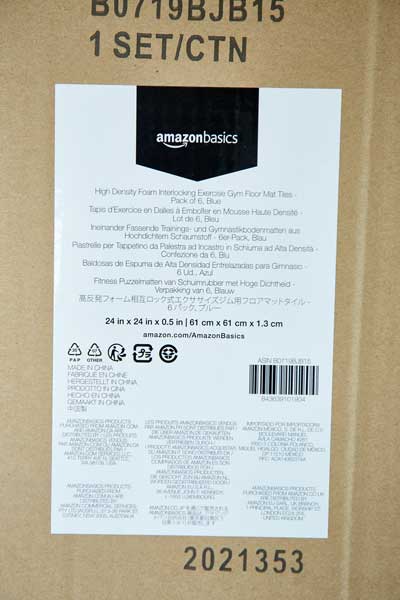
Start by matching the goods to the order: SKU, size, color, construction, artwork revision, and lot codes. Count the presented cartons and check sampled contents against the packing list. Compare the verified count with the quantity listed in the factory’s records.
Open complete retail sets. A set can contain individually acceptable tiles but still be wrong if it lacks borders, corners, straps, or instructions. Check assortment and orientation as well as the total piece count.
Dimensions, thickness and assembly
Measurements need the specified method, instrument, and specimen condition. Rolled or compressed mats may require an agreed interval after unpacking before evaluation. Record that interval; neither immediate measurement nor indefinite waiting should silently replace the approved procedure.
ISO 1923 addresses linear measurements of cellular plastics and rubbers. Pair the applicable procedure with the product’s tolerance and measurement points, and keep individual readings alongside any measurement photographs.
For puzzle mats, assemble the specified layout and check tooth engagement, gaps, edge alignment, and border fit. Where packs or production groups will be mixed in use, the agreed assembly check should represent that combination. A passing dimension on an isolated tile does not prove that a finished set fits.
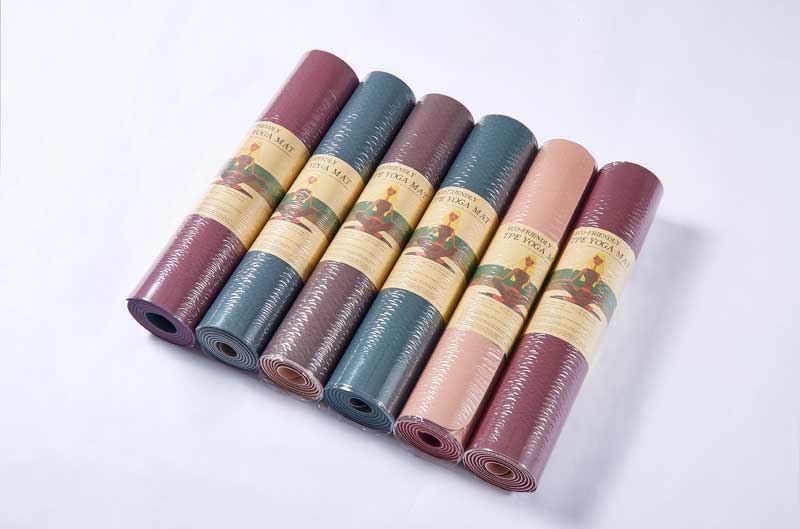
For foldable mats, check panel alignment, fold direction, closure, and packed size. For rolled mats, evaluate flat lay or curl under the agreed unpacking conditions. Do not label a shipping-related shape change permanent without the relevant recovery evaluation.
Surfaces, edges and printed details
Inspect both faces, edges and corners under the agreed viewing conditions. Record stains, foreign matter, holes, cuts, split teeth, lifted layers and print defects by location and extent. Include a scale in close-up photographs where size affects the decision.
Color comparison needs the approved reference and suitable lighting. A phone photograph is useful for communicating a finding but is not a substitute for the agreed visual or instrumental color method. Printed sets also need checks for graphic continuity and registration across adjacent pieces.
On children’s interlocking mats, detachable inserts and pieces that can separate from edges warrant attention alongside appearance. Small-part hazards can involve both the supplied construction and parts released during use or abuse.[11] Any required safety evaluation must follow the applicable product protocol; casually pulling a tooth by hand is not an equivalent test.
Function and supporting test evidence
Separate quick finished-product checks from laboratory tests. You can complete a fit check during inspection; a long-duration compression or chemical-emission test may require earlier sampling and a separate report.
For each required report, confirm that the sample identity, construction, method, and result support releasing the goods. The guide to reading a foam mat test report covers those checks in detail. A generic material certificate is not automatically evidence for the printed, laminated finished SKU.
Record odor under the agreed observation conditions, and use the required chemical test evidence to make compliance decisions. Smell cannot identify a substance or establish compliance. If a required report is missing, name it in the outstanding-release items and assign responsibility for resolving it.
Destructive or time-consuming tests can have a separate sample allocation. The report should show which checks used the full visual sample and which used fewer specimens. An unperformed test should remain “not checked” or “pending,” not be absorbed into an overall pass.
Inspect the packed product as the buyer will receive it
Compare the actual retail pack, labels, carton markings, and accessories with the approved version. Scan barcodes where required and check the decoded information against the SKU and packaging files.
Look for crushed edges, overly tight straps, folded corners, and pressure marks from the pack arrangement. Record packing configuration and product condition before altering them. If a packaging change is needed, check the revised packed unit rather than approving only an empty bag or carton.
The carton check should cover the agreed quantity, dimensions, weight, closure, and identification. Where transport-performance testing is required, record the procedure, tested packaging configuration, report reference, and result. Confirm whether later packaging changes affect the report’s applicability.
Factory inspection also precedes later handling. If required, loading checks should confirm that released stock is loaded and that the loading environment and cargo arrangement meet the agreed requirements. A pre-shipment inspection report does not automatically cover subsequent substitution, damage, or moisture exposure.
Record a decision that can be acted on
The report should allow a buyer who was not present to reconstruct the decision. It needs the lot identity, quantities available, sample selection, units checked, methods, individual findings, photographs, and results against the agreed criteria. Access restrictions and unavailable documents belong in the report as well.
Keep the inspection finding separate from the release authorization:
| Outcome | What happens next |
|---|---|
| Meets the inspected requirements | Authorized release can proceed if all other shipment conditions are satisfied |
| Fails an acceptance criterion | Hold the affected lot and agree on sorting, rework, replacement, or rejection |
| Incomplete inspection or pending evidence | Keep the relevant release decision open until the gap is resolved |
| Proposed concession | Obtain written authorization identifying the exact deviation, quantity, and lot, where such acceptance is permissible |
NEEU’s Quality Control page covers the wider inspection stages. The pre-shipment report should identify the scope actually performed for the order, rather than rely on a general factory description.
After a failed inspection
Preserve the original result and identify the stock held. A correction record should show what was sorted or reworked, how much material was affected, and how accepted stock is now identified. Repacking must not remove the connection to the original lot.
Reinspection evaluates the corrected goods against the agreed resubmission procedure. Checking only the replacement for a photographed defect leaves the rest of the lot unresolved. For example, a label correction needs evidence that you addressed the affected packs, not just a photo of one new label.
The final release record should reference both the failure and the corrective evidence. This keeps a one-order concession from becoming an undocumented specification change on the next shipment.
Download the pre-shipment inspection checklist
The editable checklist includes inspection preparation, lot and sample identification, product and packaging checks, defect records, and release authorization. It deliberately leaves numerical tolerances and sampling thresholds blank: these must come from the approved specification and applicable plan.
Buyer questions
A factory’s full visual inspection and a buyer’s shipment inspection can have different scopes. Confirm what the factory checks, how exceptions are handled, and whether the buyer’s requirements include packaging, quantity, or document review beyond those checks. Avoid treating “100% inspected” as meaning every property was tested on every unit.
Record what changed and which stock was affected. Relabeling requires checks of the corrected labels and product identity; changing the pack arrangement may also require checks of quantity, ,accessories, and product condition. The responsible release authority should define the verification needed before loading. Retain the link between the inspected stock and the repacked cartons.
No. It reports results within a stated inspection scope. Market-access documentation, regulatory obligations, and durability evidence have their own requirements. Shipment acceptance is not a prediction of service life.
Discuss Your Pre-Shipment Inspection Requirements
Send NEEU the SKU list, order quantities, approved specification, destination market, and proposed inspection date. Include the required sampling scheme, defect criteria, packaging files, and any reports that must be reviewed before release. Identify unresolved requirements before booking the inspection.
- Chen Wei and Zhou Xiuhua. [Product Quality Issues in Children’s Crawling Mats]. Quality and Certification, 2020(12), pp. 95-96. ↩︎
- ISO. ISO 2859-1:2026: Sampling procedures for inspection by attributes, Part 1.
- NIST/SEMATECH e-Handbook of Statistical Methods. What Is Acceptance Sampling?
- NIST/SEMATECH e-Handbook of Statistical Methods. What Kinds of Lot Acceptance Sampling Plans Are There?
- ISO. ISO 1923:1981: Cellular plastics and rubbers, Determination of linear dimensions.