
Thick Yoga Mat Guide: Choosing 6mm, 8mm, and 10mm for B2B Buyers
A thicker yoga mat isn’t automatically a better yoga mat. For a private-label, wholesale, or retail program, the right decision isn’t simply between 6mm, 8mm, or 10mm. It depends on the combined specifications of thickness, density, material, compression recovery, surface grip, size, and pack format.
Thicker constructions can create more distance from a hard floor during kneeling, seated, and floor-based movements. They can also increase rolled diameter, finished weight,ht and the risk of an overly soft feel in balance-focused use. This guide helps B2B buyers turn a thickness preference into a testable product brief before sampling.
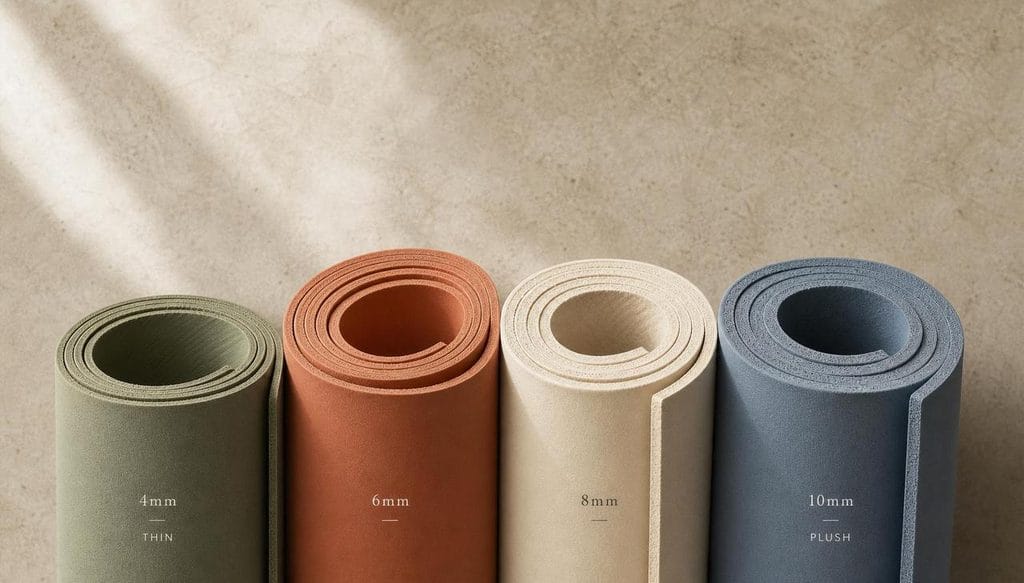
Quick answer: 6mm is commonly positioned as a balanced all-round option. 8mm and 10mm are usually developed for a more cushioned, home-practice or floor-exercise feel. The actual experience depends on the complete construction, not the millimetre number alone.
For a broader view of product formats and material routes, explore our [Yoga Mats] page.
6mm vs 8mm vs 10mm yoga mats at a glance
| Nominal thickness | Typical product position | What it can support | What buyers should confirm |
|---|---|---|---|
| 4- 5 mm | Portable or closer-to-floor yoga range | Lower bulk and more direct floor feedback | Cushioning level, carry convenience, and dry grip |
| 6mm | Balanced yoga and general fitness range | A practical balance of comfort, stability and roll size | Density, compression recovery and surface construction |
| 8mm | Cushioning-led yoga, Pilates or home-use range | More substantial support for floor-contact movements | Finished weight, roll diameter and standing feel |
| 10mm | Extra-cushion exercise or comfort range | A plush feel for stretching, floor exercise and selected home programs | Uneven compression, recovery, stable footing and pack volume |
These are product-positioning ranges, not universal performance grades. A firm, high-density 6mm mat can feel more stable than a soft 8mm mat, while two 10mm products can differ substantially in support, grip and durability.
What changes when a yoga mat gets thicker?
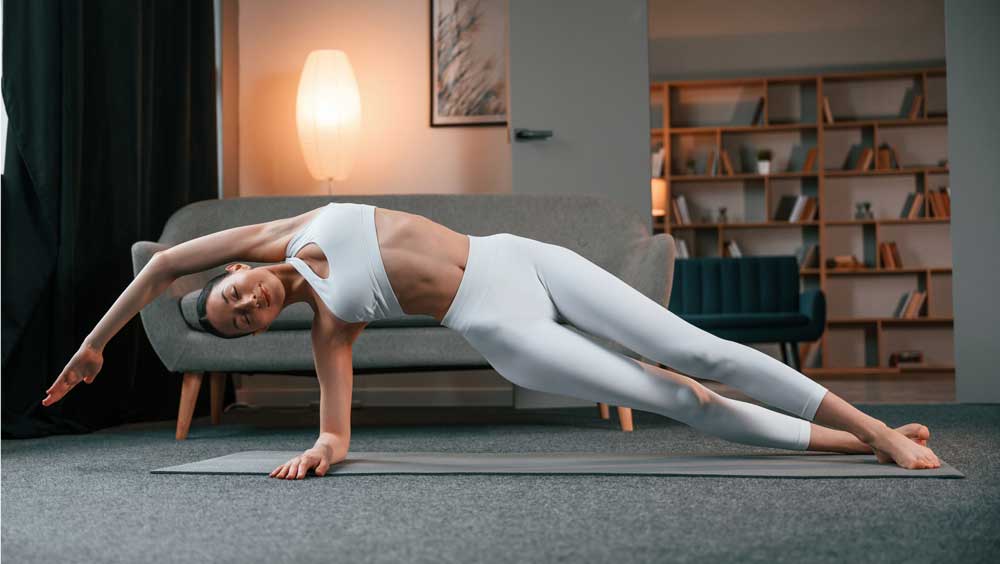
More material is available for cushioning
Thickness affects how much material is between the user and the floor. This is especially relevant for kneeling, seated, and lying movements. It is only the starting point: foam density, hardness,s and cell structure determine how that thickness responds under load.
The stability trade-off must be managed
A very soft construction may compress unevenly under a foot or hand. For standing poses, balance work, and mixed-use exercise, buyers should compare thickness with firmness, resilience, and support consistency rather than assuming more foam means better performance.
Transport and retail presentation change too
Increasing thickness usually increases finished weight and rolled diameter. That affects shelf presentation, carry straps, carton size, container loading, and end-user storage. A thick-mat program should define packaging and shipment expectations alongside product thickness.
Length and width also affect the practice area and packed dimensions. Review yoga mat length and width alongside thickness before confirming the finished size and packaging.
What Research Means for Your Yoga Mat Specification
Thickness matters, but it is only one part of how a yoga mat feels and performs. Material selection, density, surface design, and compression behavior can all influence cushioning, support, and stability during use.
In a controlled 2024 study11, researchers compared four 6mm yoga mat constructions: EVA, NBR, PU+NR, and TPE. Twenty-four healthy adult women completed single-leg landing and single-leg support tests. The results showed that mat material influenced several lower-limb and plantar-pressure measurements. In the single-leg support test, the EVA sample showed the least front-to-back center-of-pressure movement among the four materials, indicating more controlled movement under those conditions.
For buyers, the practical takeaway is straightforward: compare the finished construction, not just the material name or thickness. Evaluate a 6mm, 8mm, or 10mm mat as a complete system, including foam density, firmness, recovery, top-surface grip, and underside stability.
The study provides a useful direction for product development and sample evaluation. However, because it assessed specific 6mm samples, participants, and movements, it should support a structured sampling decision rather than serve as a blanket performance claim for every EVA, TPE, NBR, or rubber yoga mat.
How to choose the right thickness by intended use
6mm: balanced comfort for broad-use programs
A 6mm yoga mat is a sensible starting point for routines that need cushioning without excessive bulk. It suits general yoga, stretching, and broad fitness positioning when the density and surface construction deliver a controlled feel.
8mm: more cushioning for home practice and floor work
An 8mm construction can suit customers who prioritize a more substantial under-body feel for Pilates, stretching, slower yoga, or home workouts. Sample testing should confirm that the added thickness doesn’t create excessive softness or inconsistent support.
10mm: extra cushioning with a clear use-case
A 10mm yoga mat can fit a comfort-led or floor-focused exercise program. Position it realistically: it may be heavier, larger when rolled, and less suitable for buyers who want close floor feedback. Confirm compression recovery and stable footing before approving the bulk specification.
Thickness is only one part of the finished construction
Density, hardness, and compression recovery
Specify how the mat should feel and how it should recover after repeated loading. Thickness alone, without density, hardness, or compression-recovery targets, leaves too much variation between samples and bulk production.
Top surface and underside grip
Grip comes from the contact surfaces, not from thickness alone. Define the top-surface texture or finish for the intended practice condition, then define the underside texture for the expected floor types. Keep wet-grip and sweat-focused decisions on the separate Non-Slip Yoga Mat guide. Develop surface grip alongside the available [surface texture and lamination options].
Material route
TPE, PVC, and other constructions can be designed across multiple thickness bands. Do not select material by name alone. Compare the exact construction’s feel, weight, rolled size, surface durability, odor, profile, and product-specific compliance documentation.
Safety and compliance: build the check plan before sampling
Yoga mats are often used with prolonged skin contact. A risk-factor review identifies short-chain chlorinated paraffins, formamide, volatile organic compounds, certain phthalate plasticizers, and migratable heavy metals as categories that require attention in yoga-mat risk management, particularly for products intended for children or family use.
For export programs, the correct test plan depends on the finished product, intended user, destination market, and buyer requirements. Do not treat one general report or one material declaration as proof for every version of a material. Confirm the relevant test scope, limits, and documentation with the customer or an appropriate testing provider before bulk production.
Plan compliance around the destination market
For the United States and Europe, start the compliance plan with the product’s intended user, marketing claims, and final construction. An adult yoga mat does not have one universal U.S. testing checklist; buyer, retailer, and state-level requirements may vary. However, a mat marketed as a children’s product, play product, or child-oriented item may trigger additional U.S. Consumer Product Safety Commission requirements, including restrictions on regulated phthalates in accessible plasticized components, lead limits, third-party testing, and, where applicable, a Children’s Product Certificate.
For the European Union, a consumer yoga mat should be assessed under the General Product Safety Regulation (GPSR)2 and the applicable REACH restrictions on chemicals. The product file should support the safety assessment, traceability, product identification, and the responsible economic operator’s requirements. Base the chemical review on the finished material construction, including foam, surface layer, printing ink, adhesive, packaging, and any accessories supplied with the mat.
Before bulk production, confirm the destination market, intended age group, retailer protocol, and required test scope. This avoids treating a general material declaration as proof that every thickness, color, print, or packaged version of a yoga mat is compliant.
B2B sample checklist for thick yoga mats
Approve the finished sample, not just the artwork or nominal thickness. A practical review should include:
- Thickness and tolerance: Measure several points across the finished mat.
- Density, firmness, and recovery: Check how it feels after repeated compression and rolling.
- Top and bottom surface performance: Review dry grip, intended-use traction, and movement on relevant floor types.
- Finished dimensions and flatness: Confirm length, width, edge condition, curl, and lay-flat behavior.
- Weight and rolled diameter: Match retail presentation, carry accessories, and carton planning.
- Surface durability: Check embossing, print, or laminated layers after normal rolling and cleaning.
- Appearance and cleanliness: Inspect both sides for defects, foreign matter, and color consistency.
- Compliance documentation: Confirm the test reports and declarations required for the specific destination market product.
For NEEU finished product quality control, please visit: Quality Control
OEM and private-label specification checklist
| Specification area | Decisions to make before sample approval |
|---|---|
| Intended use | General yoga, Pilates, stretching, home fitness, or a mixed-use program |
| Material and construction | Material route, layer structure, density, and surface design |
| Thickness | Nominal thickness, tolerance, and target support feel |
| Dimensions | Length, width, corner profile, rolled diameter, and finished weight |
| Surface | Top texture, underside grip, and visual finish |
| Brand presentation | Colour, pattern, logo placement, alignment marks, or print method |
| Pack format | Belly band, carry strap, bag, label, carton quantity, and carton marks |
| Market documentation | Destination-market requirements, buyer test plan, and declarations |
When the thickness direction is confirmed, use our [custom yoga mat specifications] guide to define dimensions, density, branding, and pack format.
Frequently asked questions
For many general-use programs, 6mm provides a useful balance of cushioning and portability. Its suitability depends on density, firmness, surface construction, and intended movement, not thickness alone.
It can be. An 8mm product is commonly positioned for a more cushioned feel for home practice or floor exercise. Confirm compression recovery, grip, weight, and storage practicality on the finished sample.
It can if the construction is too soft or compresses unevenly. Stability depends on thickness, density, hardness, cell structure, and surface design working together.
No. It can provide more cushioning for some uses, but it may also increase weight, bulk and surface movement. The right choice depends on the intended activity and the product’s complete construction.
Start with thickness tolerance, compression recovery, surface and floor grip, dimensions, flatness, appearance, and any destination-market chemical or retailer requirements. The exact plan should match the finished product and the sales market.
Weight is the hidden cost of thickness. Each extra millimeter and increase in density adds grams, so a plush 8mm or 10mm mat weighs noticeably more than a lightweight 4mm travel mat. If you carry your mat to a studio, weight matters; if it stays on your home floor, it matters less, and you can enjoy the extra cushion.
Size is more standardized. A typical yoga mat is about 173cm long and 61cm wide, which suits most practitioners, but taller users often want a longer mat, so their whole body stays on the mat during floor poses. Thickness, weight, and size together determine a mat’s portability and practicality, so it helps to set your priorities before you buy: maximum cushion or something light and easy to move.
When sourcing in volume, weight and size are core specs, along with thickness and material. HRD Mat can tune all of these per order — length, width, thickness, and density — so a brand can offer, for example, a lightweight 4mm travel mat and a plush 8mm studio mat within the same collection, each optimized for its purpose.
Ready to Develop Your Thick Yoga Mat Range?
Share your target use, preferred thickness, dimensions, and destination market. NEEU can help you compare material constructions, confirm sample specifications, and prepare a custom yoga mat program for your brand.
Sources used for the research-context sections
- Liu Xin et al. (2024). A Study on the Effect of Different Materials of Yoga Mats on Key Biomechanical Indexes of Mat Exercise in Women. Zhejiang Sport Science, 46(4), 78-86. ↩︎
- U.S. Consumer Product Safety Commission-Phthalates Business Guidance ↩︎