
Types of Foam Explained: A Buyer’s Guide to Foam Types and Mat Material Selection
Foam is used in products as different as mattresses, furniture, protective packaging, sports equipment, and floor mats. That broad use can make material selection confusing: two materials may look similar in a sample, yet behave very differently under repeated load, moisture, heat, folding, or transport.
For product developers, importers, and sourcing teams, the useful question is not simply, “Which foam is best?” It is: which foam construction is appropriate for the product, the user, the market, and the required performance?
This guide explains the main foam types, the difference between open-cell and closed-cell structures, and the specifications that matter when developing a foam product. It then narrows the discussion to the materials most relevant to foam mat programs: EVA, XPE, TPE, and PVC.
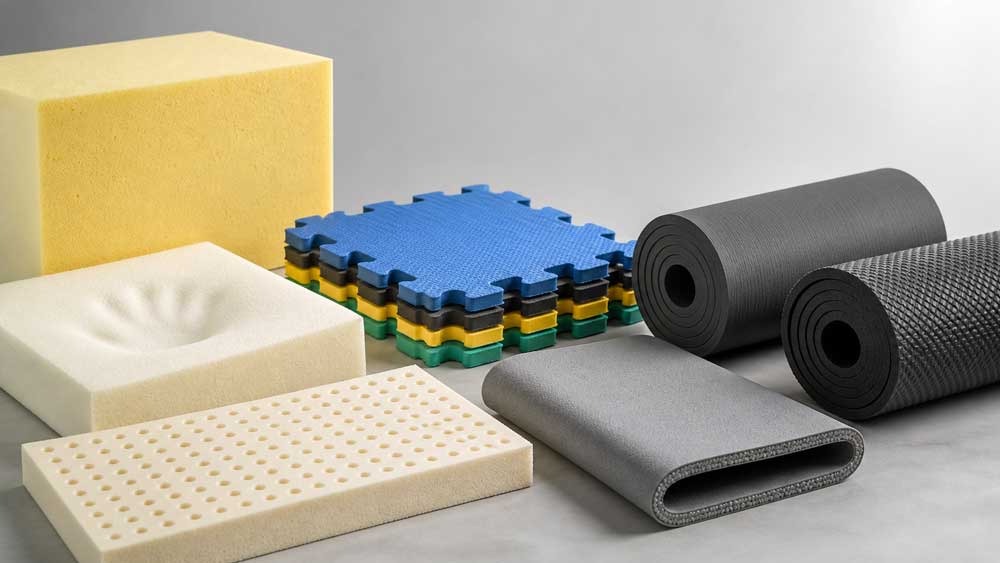
Quick answer: Flexible polyurethane, memory foam and latex are commonly selected for comfort-focused cushioning. Closed-cell constructions such as EVA and XPE are widely used where a product needs support, lower moisture uptake, dimensional stability and practical cleaning. The right choice depends on the complete finished-product specification, not on one material name alone.
What Is Foam?
Foam is a material made by trapping pockets of gas inside a solid matrix, usually a polymer such as polyurethane, polyethylene, or a rubber like latex or neoprene. How those gas cells form and arrange themselves creates a specific type of foam, which explains why one foam feels soft and springy while another is extremely firm and barely compresses. In short, foam forms through expansion, and the recipe behind that expansion defines everything about the finished product.
Different types of foam exist because no single material can satisfy every requirement. A mattress needs comfort and support; a gym mat needs shock absorption and water resistance; foam packaging needs to be lightweight yet protective. Each of these demands a different balance of density, firmness, resilience, and cost. This is why the foam industry has developed such a wide range of foam chemistries, from flexible foam for seating to rigid foam for insulation.
Understanding this basic principle makes foam selection far easier. Once you know that the cell structure, the base polymer, and the density together determine performance, you can read a specification sheet and predict how a foam will behave. That knowledge is what separates a confident buyer from one who simply hopes the sample matches the production run.
What Are the Most Popular Foam Types?
When most people think of foam, they picture the soft foam in a cushion or pillow — but that is just one category among many. The most popular foam types fall into a handful of families: polyurethane foam, memory foam, latex foam, closed-cell foam (such as EVA and polyethylene), and specialty foams like neoprene and reticulated foam. Each family has different needs, and most finished products combine several foam layers to achieve the best result.
Polyurethane foam is by far the most common foam used across furniture, bedding, and automotive interiors, prized for its comfort and support at a low cost. Memory foam, a viscoelastic foam and a specialized type of polyurethane, is famous for contouring to the body and is used in mattress toppers and premium bedding. latex foam, whether natural or synthetic, offers a bouncier, more breathable feel that many mattress manufacturers favor for durable, high-end products.
On the more technical side sit the closed-cell foams. EVA foam and polyethylene foam are high-quality foam materials that resist water, hold their shape, and withstand heavy use — which is why they dominate mats, flooring, and protective packaging. Knowing which of these popular foam types suits your application is the first real step in choosing a foam, and the rest of this guide to foam will walk through each one in detail.
Basic classification of foam materials
Open-Cell vs. Closed-Cell Foam
| Buyer consideration | Open-cell foam | Closed-cell foam |
|---|---|---|
| Cell structure | Cells are interconnected | Cells are mostly separate and enclosed |
| Typical feel | Softer and more compressible | More supportive at a comparable thickness |
| Airflow | Higher | Lower |
| Moisture behavior | Usually absorbs moisture more readily | Often has lower moisture uptake, depending on material and construction |
| Common applications | Upholstery, bedding, acoustic products, comfort cushions | Foam mats, protective packaging, buoyancy parts, seals, and some insulation products |
| What to verify | Density, indentation force, recovery, airflow | Density, hardness or compression force, compression set, water absorption, and dimensional tolerance |
Neither structure is automatically better. Open-cell foam can be the right choice for soft seating or cushioning. Closed-cell foam is often a strong starting point for mat products, but the final decision still depends on the polymer, thickness, surface, and intended use. Read our Closed Cell Foam B2B Guide for a more detailed explanation of this structure.
Classification by Hardness
Foamed plastics can be classified by flexibility into soft, rigid, and semi-rigid types.
- Rigid foamed plastics: Hard in texture, used as thermal insulation materials, sound insulation materials, pipe insulation materials, floating materials, and shock-absorbing packaging materials.
- Soft foamed plastics: Soft and elastic, mainly used as padding materials, foam artificial leather, etc.
Classified by density
| Category | Density Range | Features |
| Low-density foam | >0.4 g/cm³ | High density, dense structure, good strength. |
| Medium-density foam | (0.1-0.4 g/cm³) | Balanced performance, most widely used. |
| High-density foam | (<0.1 g/cm³) | Extremely low density, lightest, highest expansion ratio. |
Foam density affects product weight, cushioning balance, and batch consistency, but it should be evaluated together with thickness, hardness, and the intended application. Learn more in our Foam Density Guide.
Classification by Base Polymer
Almost all thermoplastics and thermosetting plastics can be processed into foamed plastics. Common base materials include: polyethylene (PE, with subcategories including XPE/IXPE, etc.), polyurethane (PU), polyvinyl chloride (PVC), polypropylene (PP), polystyrene (PS), phenolic resin (PF), EVA (ethylene-vinyl acetate copolymer), TPE (thermoplastic elastomer), etc.
Detailed Explanation of Common Foam Material Types
Polyurethane Foam (PU Foam)
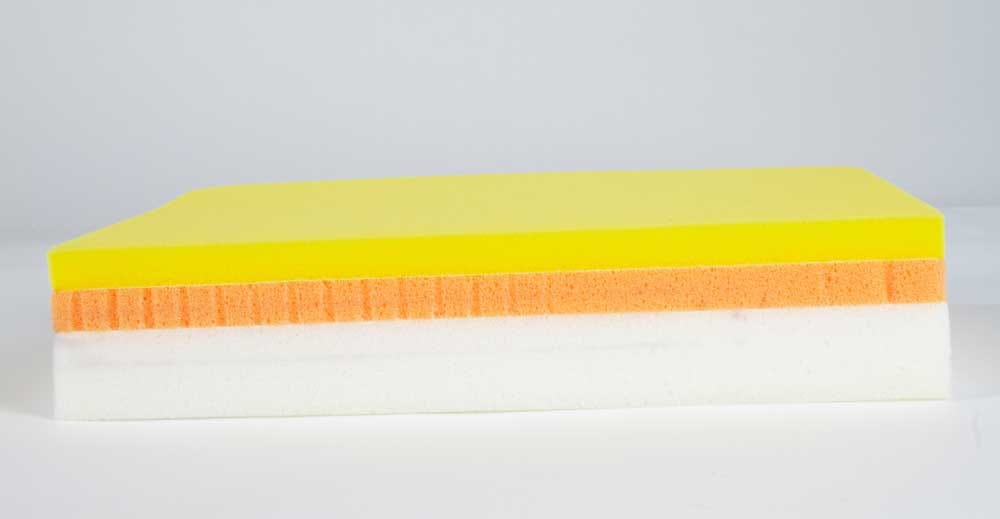
Flexible polyurethane foam is widely used for furniture, seating, bedding, and general cushioning. It can be formulated across a broad range of densities and comfort levels, which makes it a common material for sofa cushions, car seats, and mattress layers.
For buyers, PU foam is usually evaluated through density, firmness or indentation force, resilience, compression set, and the expected use cycle. It is generally selected for comfort applications rather than as the primary material for a wipe-clean interlocking floor mat.
Where it fits: upholstery, bedding, seating, soft protective cushioning, and certain specialty sports constructions.
Memory Foam
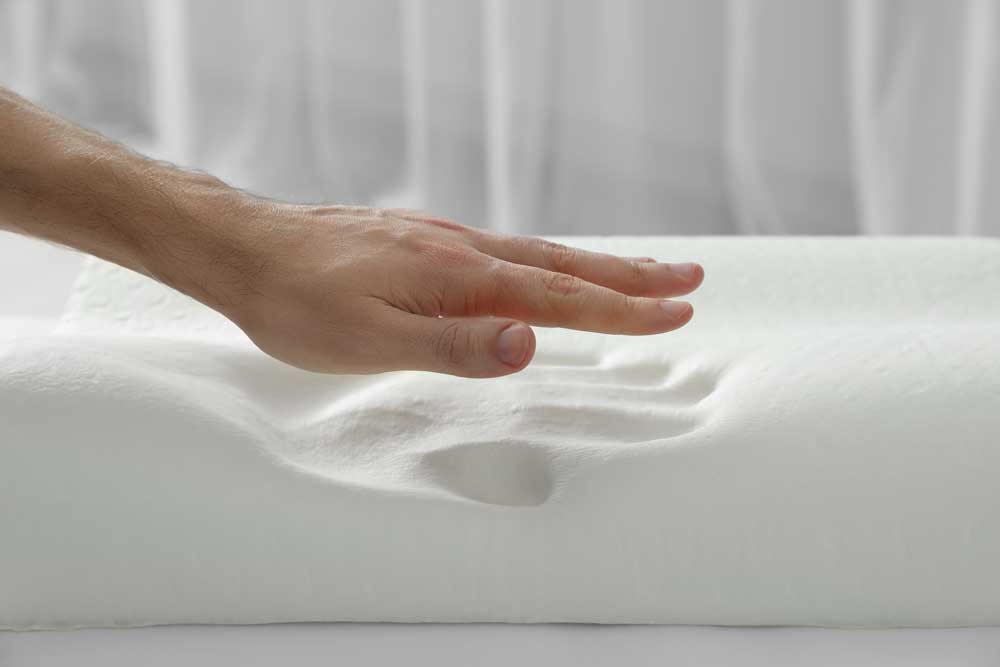
Memory foam is a viscoelastic type of polyurethane foam. It is designed to deform gradually under body heat and pressure, then recover more slowly than conventional flexible foam. That pressure-relieving feel explains its strong association with mattresses and pillows.
Its slower response and heat-sensitive feel can be useful in sleep products, but they are not automatically advantages for a yoga mat, gym tile, or children’s play mat. When comparing materials, evaluate the actual product experience rather than assuming that a familiar material name signals better performance.
Compared with latex or standard cushion foam, memory foam traps more heat and returns to shape more slowly. That trade-off is ideal for sleep products but poor for seating that needs quick rebound. Understanding this behavior helps buyers decide when memory foam is genuinely the right choice and when a more resilient foam would serve them better. Foam is often over-specified for marketing reasons, so matching the foam to the real use case protects both cost and product reputation.
Where it fits: mattresses, mattress toppers, pillows, and comfort layers.
Latex Foam
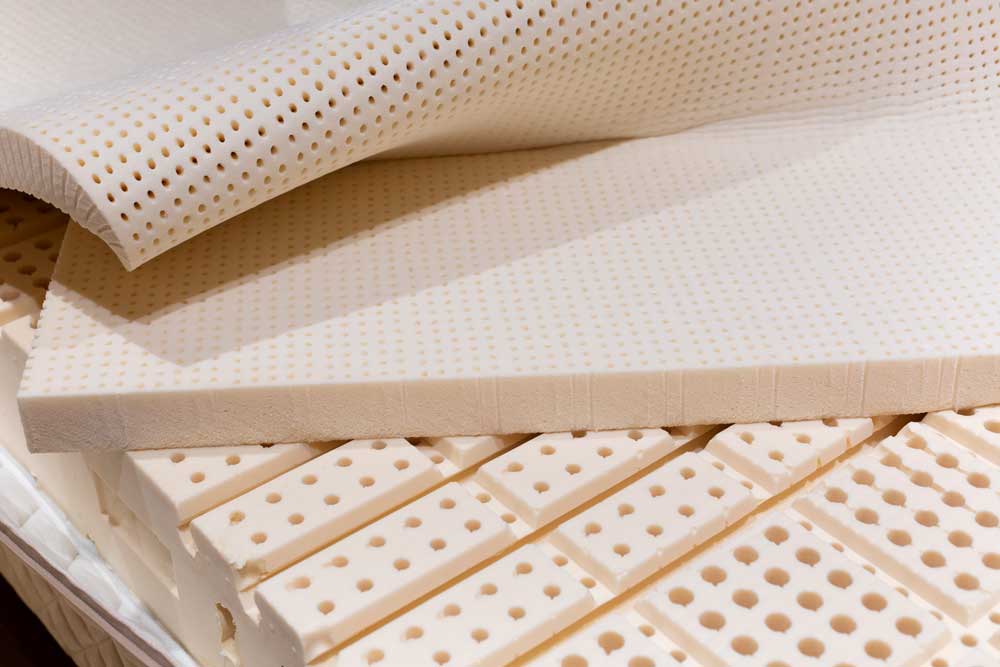
latex foam may be made from natural latex, synthetic latex, or a blend of the two. It is often valued for its resilient feel, breathability, and long-term comfort performance. It is commonly positioned in higher-end mattress and cushion products, where its material cost and supply requirements can be justified.
Latex is outside the normal material route for most foam mat programs, but it belongs in a broad foam guide because it is a common alternative considered by buyers researching comfort products.
Compared with polyurethane foam, latex is more durable and more resilient — it springs back quickly rather than slowly sinking, as memory foam does. This makes latex a favorite among mattress manufacturers who want a responsive, cool-sleeping surface. The trade-off is cost: latex foam is significantly more expensive to produce, so it typically appears in higher-end products rather than budget lines. For buyers, the question is rarely which foam is universally best, but which foam offers the right balance of durability, feel, and price for the target market.
Latex is not only for bedding. Its elasticity and resistance to compression make it useful in gaskets, footwear, and select cushion applications. However, because it is a rubber-based material, some end users have latex sensitivities, which is an important consideration for products that come into contact with skin. When choosing a foam for consumer goods, weighing performance against these practical factors is part of responsible foam selection.
Where it fits: premium mattresses, pillows, and resilient cushioning.
Polyethylene Foam (PE Foam)
Polyethylene foam is a broad family of lightweight foam materials commonly used for protective packaging, insulation-related products, and industrial parts. Depending on the grade and processing route, PE foam can offer useful moisture resistance, dimensional stability, and cut accuracy.
Cross-linked polyethylene, often referred to as XLPE or XPE in product discussions, has a finer, more uniform cell structure than many non-cross-linked PE foam grades. This makes it relevant to protective foam, foldable mats, underlay, and selected sports or recreational products.
Common subtypes:
- EPE (Expandable Polyethylene/EPE foam): Non-crosslinked closed-cell structure. Lightweight and soft, highly elastic, excellent shock absorption and cushioning, good water resistance, but poor high-temperature resistance (≤70℃).
- XPE (Chemically Crosslinked Polyethylene): Dense, fine, elastic, high resilience, pressure-resistant, durable, and not prone to powdering.
- IXPE (Electronically Crosslinked Polyethylene/Radiation Crosslinked Polyethylene): An upgraded version of XPE, with a finer and more uniform cell structure, achieved through electron beam irradiation crosslinking.
Where it fits: protective packaging, custom inserts, foldable constructions, underlay, and selected foam mats.
EVA Foam
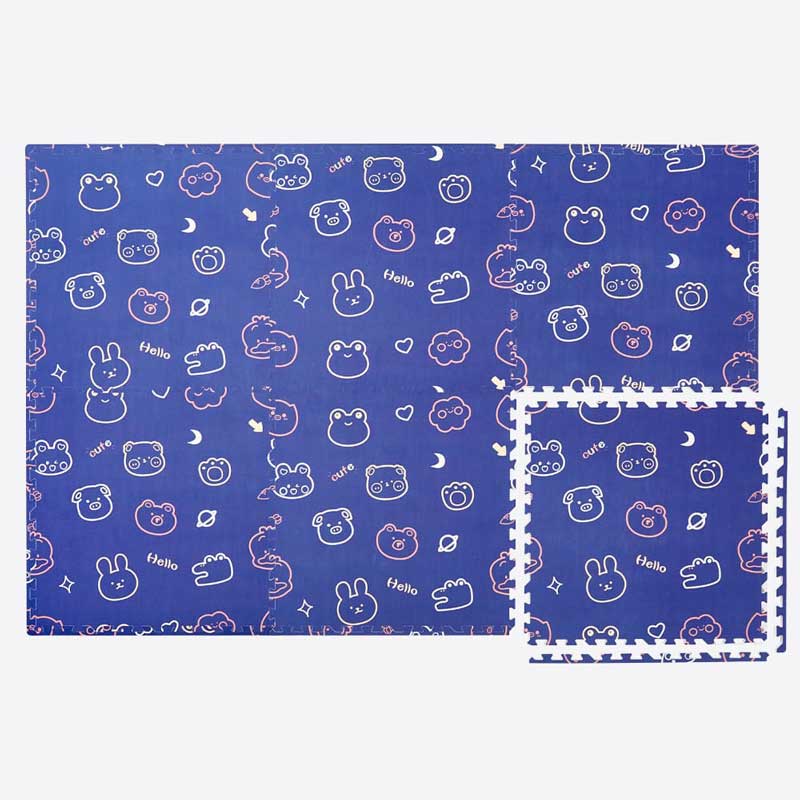
EVA, or ethylene-vinyl acetate foam, is one of the most widely used materials for interlocking mats, children’s play mats, gym flooring, and sports-protection products. It can be produced in different densities, thicknesses, colors, and surface textures, then cut, embossed, printed, or laminated according to the product design.
For a mat buyer, EVA should be evaluated as a finished construction. A tile’s fit, surface grip, cushioning, odor profile, color consistency, edge quality, and compliance plan matter as much as the material name. Explore EVA Foam Mats for the product-format view.
Where it fits: interlocking puzzle mats, play mats, gym flooring, exercise mats, and protective foam components.
XPE Foam
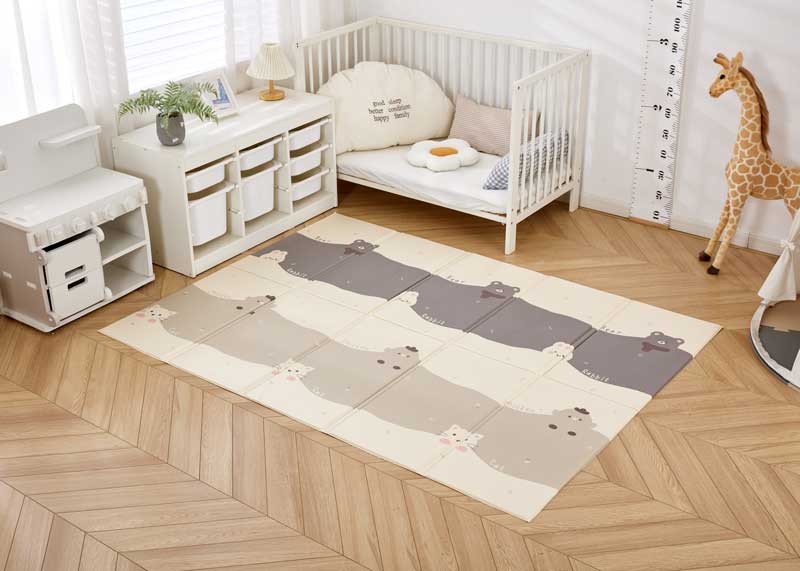
XPE is cross-linked polyethylene foam. Its fine-cell structure, low weight, and supportive cushioning make it a practical option for foldable mats, baby play mats, protective foam, and roll or panel constructions. It is often selected where a product needs to fold, lie flat, pack efficiently, and retain a consistent visual surface.
The final behavior of an XPE mat depends on its thickness, density, layers, fold layout, surface treatment, and intended load. It should be sampled in the actual finished format, especially when folding performance or a printed surface is important.
Where it fits: foldable mats, baby play mats, protective foam, underlay, and selected exercise products.
TPE Foam Constructions
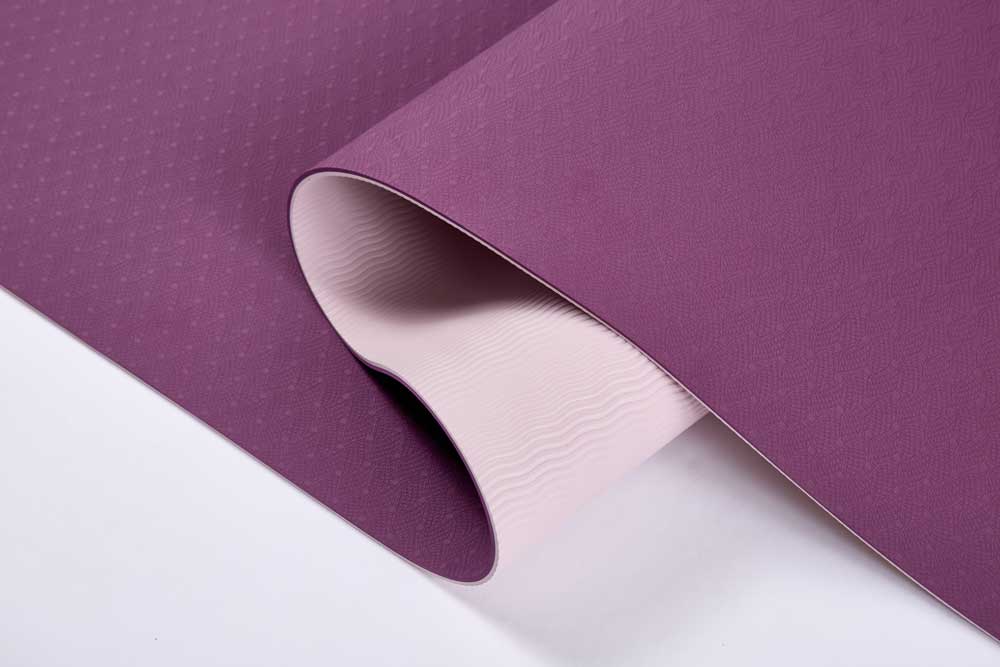
TPE is a family of thermoplastic elastomer materials rather than one fixed foam recipe. In the mat market, TPE constructions are often considered for yoga, exercise, and home-use mats because they can be developed to deliver a particular feel, texture, and brand presentation.
Because formulations and layered constructions vary, buyers should not select a TPE mat based solely on a generic material label. Confirm the finished surface, grip expectations, thickness, odor requirements, durability needs, and test plan for the relevant market.
Where it fits: yoga mats, exercise mats, and specialty home-use mats.
PVC Mat Constructions
PVC is also used in certain yoga, exercise, and utility mat constructions. It can support a variety of colors, textures, and roll formats. As with TPE, the appropriate specification is based on the complete finished product and the destination market requirements, not on a material label alone.
Where it fits: yoga mats, exercise mats, utility mats, and roll-mat programs.
Which Foam Types Are Used for Mats?
For NEEU’s product range, material selection normally begins with the application and desired finished-product experience.
| Mat application | Common material routes to discuss | Key buyer priorities |
|---|---|---|
| Interlocking floor mats | EVA foam | Tile fit, load support, surface texture, edge quality, thickness, and color program |
| Baby and kids play mats | EVA or XPE constructions | Cushioning, cleanability, printed or laminated surface, foldability, market-specific test plan |
| Foldable mats | XPE and suitable layered constructions | Fold layout, recovery, flat lay, carrying format, panel alignment, and protective packaging |
| Yoga mats | TPE or PVC constructions; other routes as specified | Surface feel, grip expectations, thickness, flat lay, artwork, and retail packaging |
| Exercise and gym mats | EVA, XPE, TPE, PVC, or a purpose-designed multi-layer construction | Intended load, cushioning, recovery, surface durability, and use environment |
| Protective foam components | PE, XPE, EVA, or project-specific foam construction | Product fit, cut tolerance, cushioning response, pack-out, and transit protection |
This table is a starting point, not a universal prescription. For example, a high-impact landing product may use a layered or specialized construction that differs from a lightweight play mat. Define the activity, user group, and performance target before choosing material.
Density, Hardness, and Thickness: What Do They Actually Tell You?
Density is important, but it should never be the only number in a foam specification. It indicates how much material is present in a given volume and can affect weight, cost consistency, and some durability characteristics. It does not, by itself, define how firm a mat feels or how it will recover after repeated use.
For a practical foam-mat specification, consider the full group of variables:
| Specification | Why it matters |
|---|---|
| Base material and cell structure | Sets the overall material route and process options |
| Density range | Helps control weight, material consistency, and product cost |
| Hardness or compression-force target | Describes support and perceived firmness |
| Thickness and tolerance | Affects cushioning, pack size, foldability, and fit |
| Compression set and recovery | Indicates behavior after storage compression and repeated load |
| Tensile and tear performance | Important around cut edges, tile teeth, and folding zones |
| Surface texture or lamination | Shapes, grip, cleanability, appearance, and brand presentation |
| Dimensions and conversion tolerance | Critical for tiles, panels, rolls, and packaging inserts |
| Finished-product testing | Confirms the project meets the buyer’s specific market and use requirements |
Two mats can have the same thickness and density while still feeling noticeably different. The safest approach is to approve a finished sample against agreed-upon acceptance criteria rather than selecting a product based solely on a density figure.
A Practical Foam Selection Process for Buyers
- Start with the end use
Describe how the product will be used, by whom, where, and how often. A children’s play mat, an interlocking gym floor, a home yoga mat, and a protective packaging insert require different design priorities.
2. Choose the material route
Use the application to narrow the field. EVA and XPE are common starting points for many closed-cell mat programs; TPE and PVC constructions are relevant to specific yoga and exercise-mat requirements. PU, memory foam, and latex are typically found in comfort-focused cushioning products.
3. Define the finished construction
Agree on dimensions, thickness, density range, firmness target, color, texture, fold arrangement, layers, artwork, and accessories. For interlocking mats, include the teeth profile, border pieces, and set configuration. For foldable mats, include panel layout and folding direction.
4. Build compliance into development
Requirements vary by destination market, intended user, and product category. Tell the manufacturer the market, buyer standard, and any retailer requirements before mass production. Product-specific testing and documentation should be agreed upon for the actual finished construction.
5. Approve samples and packaging together
Review the sample for functional performance, visual quality, odor, surface condition, dimensions, and pack-out. Then approve labels, barcode position, bags, cartons, carton marks, and transit protection. This avoids treating packaging as an afterthought after the product has been finalized.
From Foam Knowledge to a Finished Mat Program
Broad material knowledge is useful, but it only becomes commercially valuable when it is converted into a repeatable product specification. NEEU supports foam-mat programs from material discussion and sample development through foaming, cutting, surface treatment, final inspection, and export packaging.
For product-specific next steps, explore:
- Baby & Kids Play Mat
- Interlocking Foam Mats
- Foldable Mats
- How to Customize Foldable Mats
- Quality Control
Types of Foam Explained: A Buyer‘s Guide – FAQ
A: Common foam types include flexible polyurethane foam, memory foam, latex foam, polyethylene foam, EVA foam, and XPE foam. TPE and PVC constructions are also common in specific mat categories. The right material depends on the application, desired feel, durability target, and compliance requirements.
A: No. EVA and polyethylene are different polymer families, although both can be used in closed-cell foam constructions. Their processing routes and finished-product behavior differ. Compare them using the intended application, thickness, surface, support target, and test requirements.
A: XPE commonly refers to cross-linked polyethylene foam and is often used in a closed-cell construction. Confirm the actual product specifications with the supplier, as formulation and final construction affect performance.
A: No. Density is one useful specification, but firmness, thickness, recovery, cell structure, surface construction, and intended use also matter. A higher-density foam may not provide the right feel or function for every product.
A: EVA and XPE are common material routes for play mats, but the correct choice depends on whether the product is interlocking or foldable, the required thickness, surface design, cleaning expectations, target market, and applicable product-testing plan.
A: Share the application, target market, product size, thickness, material preference if known, color, surface texture, artwork, packaging concept, expected order quantity, and any buyer or testing requirements. A reference sample, drawing, or product photo is also helpful.
A: Once you know which type of foam your product needs, the next challenge is finding a manufacturer who can deliver it consistently. As an EVA, TPE, and PVC foam mat manufacturer with in-house foam blowing and a dedicated R&D team across our factories in China and Vietnam, we produce closed-cell foam mats and custom foam products to precise specifications for density, thickness, texture, and color. Controlling the process from raw polymer to finished product is how we guarantee the quality of foam used in every order.
Our range covers interlocking EVA puzzle mats, high-density gym flooring, printed and suede play mats, and private-label TPE and PVC yoga mats — with full OEM/ODM support for brands, importers, and distributors. Because we manufacture in-house, we can advise on foam selection, produce approval samples quickly, and scale from first order to ongoing supply without quality drift. For buyers weighing different types of foam, having a partner who understands the material as deeply as the product removes a great deal of sourcing risk.
Just as important, we treat safety and compliance as requirements rather than afterthoughts. Our low-formamide foaming technology and certifications — including REACH, EN71, RoHS, CE, and BSCI — give brands confidence that their foam material will pass inspection in demanding markets. Whether you are sourcing durable foam for gyms, soft foam for children’s play areas, or custom inserts for foam packaging, our team can help you specify the right foam and provide samples for approval.