
What Is EVA Foam: Properties, Manufacturing, and Common Uses
What Is EVA Foam
EVA foam is a synthetic plastic material made from ethylene and vinyl acetate. It forms a closed-cell structure, offering cushioning, flexibility, and water resistance for countless applications.
Definition and Chemical Composition
EVA foam stands for ethylene-vinyl acetate foam. It is a copolymer created by combining two materials: ethylene and vinyl acetate.
Vinyl acetate typically accounts for 10 to 40 percent of the foam’s weight, while ethylene makes up the remainder. The manufacturing process blends these copolymers with polyethylene and other additives.
Technicians add foaming agents, catalysts, and cross-linking agents to create the final product. You can adjust the foam’s properties by varying the amount of vinyl acetate in the mix.
EVA foam is classified as a thermoplastic material, not rubber. While it shares some elastic properties with rubber, its chemical composition classifies it as a plastic.
The material can be heated and reshaped multiple times without breaking down.
Key Characteristics
EVA foam provides excellent cushioning and shock absorption at a lower cost than polyurethane foam. You’ll find it resists water, moisture, and oils due to its smooth surface.
The material also offers thermal insulation, working effectively in temperatures ranging from -30 to 80 degrees Celsius. The foam is lightweight and flexible while maintaining durability.
It resists stress cracks and UV radiation better than many traditional foam materials. You can customize the hardness of EVA foam, which ranges from 15 to 80 Shore C on the durometer scale.
EVA foam comes in various colors beyond the standard black and white. Manufacturers add color masterbatch during production to create red, blue, green, yellow, and other shades.
The density ranges from 33 to 280 kg/m³, giving you options for different applications. The material resists breaking down over time and handles repeated compression well.
When manufacturers add natural rubber or EPDM, the foam becomes even more resilient. This combination creates a durable material that stays lightweight and portable.
Closed-Cell Structure
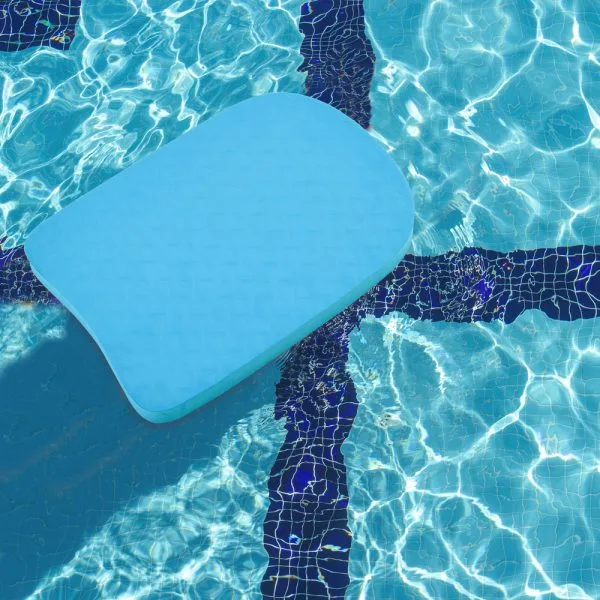
EVA foam features a closed-cell structure formed during vulcanization. Each cell in the foam is completely sealed off from neighboring cells.
This structure prevents water, air, and moisture from passing through the material. The closed-cell foam structure gives EVA its waterproof properties and buoyancy.
You’ll see this feature used in marine products like swim kickboards, boat mats, and life jackets. The sealed cells trap air inside, making the foam float on water.
This structure also provides superior insulation compared to open-cell foams. Heat cannot travel easily between the sealed cells, which makes EVA foam effective for thermal protection.
The closed cells create a smooth, flat surface that resists tearing and damage. The cross-linked nature of the cells adds strength to the material.
Unlike open-cell foams that remain compressed, closed-cell EVA foam bounces back to its original shape. This resilience makes it perfect for protective padding in sports equipment and floor mats.
How EVA Foam Is Made
Making EVA foam involves combining ethylene and vinyl acetate through heat and pressure. The material is then expanded into a closed-cell foam structure.
Manufacturers adjust additives and processing methods to create foam with specific properties for different uses.
Copolymerization Process
The production of EVA foam begins with copolymerizing ethylene and vinyl acetate monomers. These two chemicals link together under controlled heat and pressure to form long polymer chains.
The ratio between ethylene and vinyl acetate determines the final properties of the foam. Polyethylene provides the base structure and strength.
Vinyl acetate usually varies from 10 to 40 percent of the total weight, and this percentage affects softness and flexibility. The ethylene-vinyl acetate copolymer is formed by mixing in specialized equipment such as a Banbury Mixer.
This machine blends the raw materials evenly at high temperatures. The result is a thermoplastic material that can be shaped and molded into different forms before the foaming step begins.
Foaming Techniques
After copolymerization, manufacturers process the material through extrusion or molding to create the closed-cell foam structure. An EVA Mold Foaming Vulcanizing Machine heats and expands the copolymer into sheets or rolls.
This expansion creates millions of tiny sealed air pockets throughout the material. The closed-cell structure makes EVA foam waterproof and gives it excellent shock absorption.
Each cell remains separate from its neighbors, which prevents water and moisture from passing through the foam. Processing parameters like temperature, pressure, and timing control the final density of the foam.
You can find EVA foam with densities ranging from 33 kg/m³ for lightweight applications to 280 kg/m³ for heavy-duty uses. The foam can be cut into sheets, mats, or custom shapes after cooling.
Additives and Customization
Manufacturers add various chemicals to the base copolymer to enhance specific properties. UV stabilizers protect the foam from sun damage, making it ideal for outdoor gear and sporting equipment.
Colorants create foam in different shades for cosplay costumes, yoga mats, and children’s toys. Other common additives include:
- Blowing agents to control cell size and density
- Stabilizers to improve durability and resistance to wear
- Flame retardants for safety in certain applications
- Antioxidants to prevent material breakdown
The hardness of EVA foam can range from 15 to 80 degrees on the Shore C scale, depending on the formulation. This customization allows manufacturers to produce foam for athletic shoes, packaging, padding material, and thousands of other foam products.
Each formula targets specific needs, such as cushioning in running shoes or padding in equipment and helmets.
Physical and Chemical Properties
EVA foam’s closed-cell structure creates unique physical and chemical characteristics. These properties make it ideal for applications requiring cushioning, water protection, and temperature stability.
These properties stem from the copolymer of ethylene and vinyl acetate that forms the material’s foundation.
Impact Absorption

EVA foam excels at absorbing impacts and vibrations due to its closed-cell foam structure. When you compress the material, the sealed air bubbles within each cell work together to distribute force evenly across the surface.
This vibration absorption makes EVA foam a go-to material for athletic shoes, protective padding in equipment, and floor mats. The level of impact absorption varies based on density.
High-density EVA foam offers superior shock resistance for heavy-duty applications like sporting equipment and helmet padding. Lower-density foam provides softer cushioning for yoga mats and children’s play mats.
The material returns to its original shape after compression, which means EVA foam products maintain their protective qualities over time.
Water Resistance and Buoyancy
The closed-cell structure of EVA prevents water and moisture from penetrating the material. Each sealed cell prevents liquid absorption, keeping EVA foam lightweight even when exposed to wet conditions.
This waterproof quality makes it essential for boat accessories, pool toys, and outdoor gear. EVA foam floats naturally because air trapped in the closed cells provides buoyancy.
You’ll find this property used in life vests, paddleboards, and flotation devices. The material won’t become waterlogged or sink, unlike open-cell foam, which absorbs water.
EVA also resists mold and mildew growth since moisture cannot enter the foam structure.
Thermal Insulation and Chemical Resistance
EVA foam provides effective thermal insulation by trapping air within its closed-cell structure. The material has good low-temperature properties and maintains flexibility in both hot and cold environments.
You can use EVA foam sheets to insulate floors and walls and to package temperature-sensitive items. The material demonstrates strong chemical resistance to many common substances.
EVA foam resists damage from oils, solvents, and cleaning chemicals, which extends its lifespan in harsh environments. It also shows resistance to UV radiation, though prolonged sun exposure may cause some degradation over time.
This acetate copolymer doesn’t contain phthalates like polyvinyl chloride, making it safer for children’s toys and foam mats.
Types and Grades of EVA Foam
EVA foam comes in different types based on density and hardness, ranging from soft and flexible to firm and durable.
Manufacturers can also create custom formulations by adding specific materials to meet requirements for fire resistance, anti-static properties, or enhanced durability.
Density and Hardness Variations
EVA foam density typically ranges from 33 kg/m³ to 280 kg/m³. Low-density foam (33-80 kg/m³) feels lightweight and flexible, making it good for yoga mats and craft projects.
Medium-density foam (80-150 kg/m³) balances cushioning with support, which you’ll find in shoe insoles and protective padding. High-density EVA foam (150-280 kg/m³) offers superior durability and impact resistance for industrial uses and heavy-duty flooring.
Hardness is measured on the Shore C scale from 15 to 80. Lower numbers indicate softer material, while higher numbers mean firmer foam.
The most common hardness is 40 Shore C, which provides a good balance for general applications. You can choose softer foam (15-30 Shore C) for cushioning products like helmet liners or harder foam (60-80 Shore C) for structural components that need to resist compression.
Custom Formulations
You can get EVA foam with specialized additives to match specific needs. Manufacturers add flame-retardant chemicals to improve heat and fire resistance for building materials and protective equipment.
Antistatic agents are mixed into the foam to create packaging that protects electronic devices from damage caused by static electricity. Color masterbatch enables EVA foam to be produced in a range of colors beyond standard black and white.
You can also blend EVA with natural rubber or EPDM to increase resilience and durability. Some formulations include UV-resistant additives to prevent breakdown from sun exposure in outdoor applications.
Cross-linked EVA foam undergoes additional processing during vulcanization to create a stronger closed-cell structure with better insulation properties.
Major Applications of EVA Foam
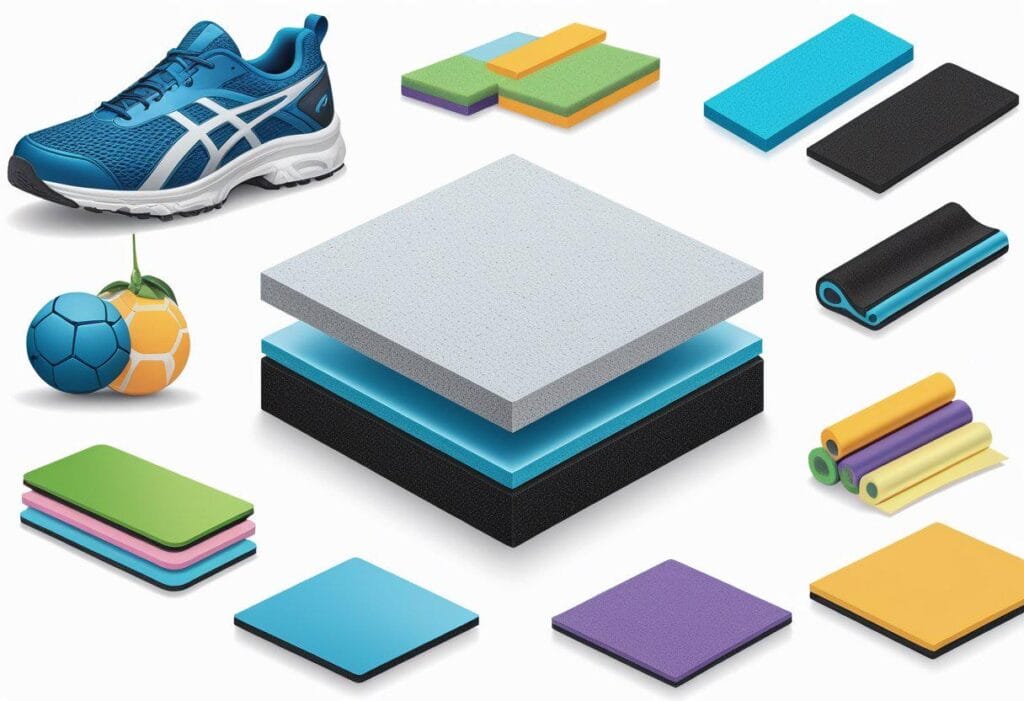
EVA foam serves critical roles in footwear cushioning, sports protection, secure packaging, and creative projects. Its impact absorption and closed-cell structure make it ideal for products that need durability and comfort.
Footwear and Orthotics
EVA foam is the primary material in shoe midsoles for athletic shoes and running shoes. The foam absorbs impact when your foot strikes the ground, reducing stress on your joints and muscles.
Most major athletic shoe brands use EVA foam midsoles because the material balances cushioning with lightweight support. You’ll also find EVA foam in custom orthotics and insoles.
The foam can be molded to match your specific foot shape, providing targeted support where you need it most. This customization helps with conditions like plantar fasciitis and flat feet.
The closed-cell foam structure makes EVA waterproof, which keeps moisture from breaking down the padding in shoes. EVA foam maintains its cushioning properties even after repeated compression.
High-density EVA foam is used in work boots and hiking shoes where extra durability is required.
Sporting Goods and Protective Gear
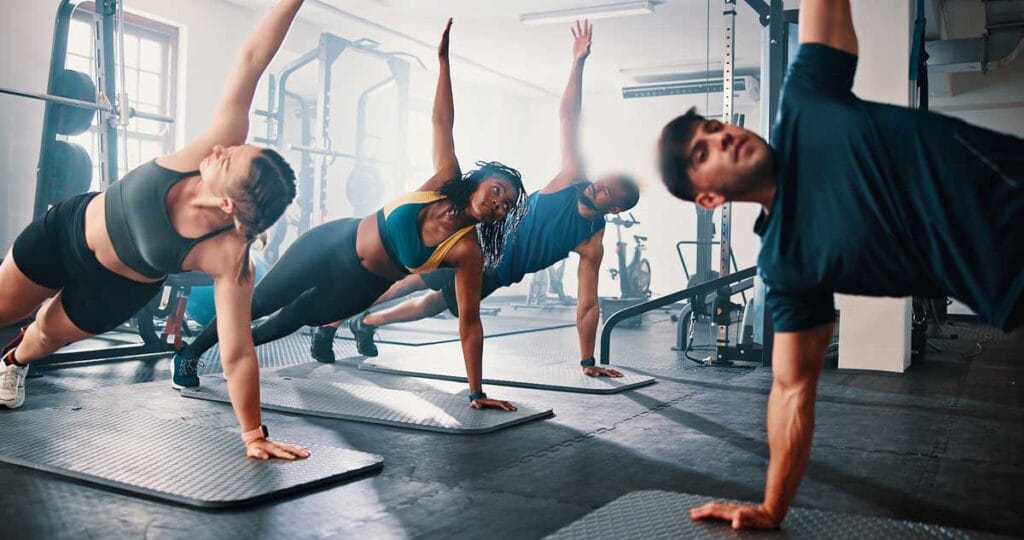
EVA foam products protect athletes in contact sports and high-impact activities. The material’s excellent shock and vibration absorption make it a go-to for padding in equipment like helmets, shin guards, and knee pads.
You’ll encounter EVA foam in boxing gloves, where it cushions impacts while remaining lightweight. Yoga mats and exercise mats commonly use EVA foam because it provides cushion without being too soft.
The foam offers grip and comfort during floor exercises. The closed-cell structure of EVA means your mat won’t absorb sweat or moisture during workouts.
Foam padding material in protective gear stays flexible in cold conditions. This characteristic of EVA foam ensures your equipment works reliably across a range of temperatures.
Many sporting equipment manufacturers choose EVA over polyurethane foam or natural rubber because it offers better durability and stress-crack resistance.
Packaging and Protective Solutions
EVA foam is used extensively in protective packaging for electronics, glass items, and delicate machinery. The foam material absorbs shocks during shipping and handling, preventing damage to your products.
Custom foam inserts can be cut to fit specific items precisely, holding them securely in place. The closed-cell foam provides excellent impact absorption without adding excessive weight to packages.
You can find EVA foam sheets and foam rolls that packaging companies cut to custom dimensions. The material resists water and moisture, protecting contents even if the outer packaging gets wet.
| Packaging Application | EVA Foam Benefit |
| Electronics shipping | Shock and vibration absorption |
| Medical equipment | Custom-fit protection and cleanliness |
| Tool cases | Durable, moisture-resistant padding |
EVA foam products maintain their shape after compression, so you can reuse packaging multiple times.
Crafts, DIY, and Cosplay
EVA foam sheets have become essential in cosplay and costume creation. You can heat the foam material and shape it into armor, props, and accessories that look like metal or hard plastic.
The foam is easy to cut with basic tools and accepts paint well after priming. Craft projects use EVA foam because it’s safe for children and easy to work with.
The material comes in various thicknesses and colors, from thin sheets for detailed work to thick foam for structural pieces. You can glue EVA foam with contact cement or other adhesives designed for foam.
The softness and flexibility of EVA make it comfortable to wear in costumes for extended periods. Cosplayers often use high-density EVA foam for pieces that require greater rigidity, such as chest plates or shields.
You’ll need to seal the foam with a primer before using acrylic or spray paint to achieve a smooth finish. EVA foam mats are popular for children’s play areas and gym flooring.
The foam cushions fall and reduce noise from footsteps. The interlocking foam mats are simple to install and remove when you need to reconfigure your space.
Industry Uses and Specialized Applications
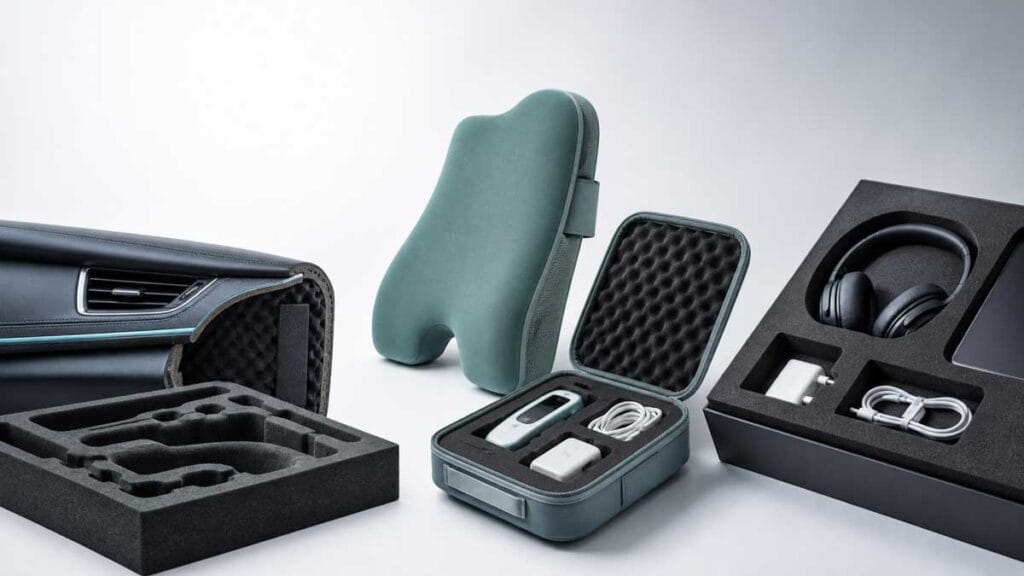
EVA foam serves critical roles in automotive, healthcare, and consumer electronics due to its closed-cell structure, water resistance, and cushioning properties. These industries rely on ethylene vinyl acetate for applications requiring durability and protection.
Automotive and Marine
Automotive manufacturers use EVA foam for interior padding, dashboard components, and floor insulation because it dampens vibrations and reduces noise. The closed-cell structure prevents water absorption, making it ideal for boat flooring and marine equipment where moisture resistance matters.
You’ll find this foam in car door panels and under seats, where it helps absorb impacts during collisions. Marine applications benefit from EVA’s natural buoyancy and waterproof qualities.
Boat decks often feature EVA foam mats that provide non-slip surfaces while resisting saltwater damage. The material doesn’t break down as quickly under UV exposure as natural rubber does, extending its lifespan in outdoor conditions.
Electric vehicle makers prefer EVA foam because it weighs less than traditional materials while still providing thermal insulation. This helps improve energy efficiency without sacrificing passenger comfort.
The foam also stays flexible in cold temperatures, maintaining its cushioning properties even during winter months.
Healthcare and Medical Devices
Medical professionals rely on EVA foam for orthotics and prosthetic liners because it distributes pressure evenly across sensitive areas. The material’s shock absorption helps patients with foot conditions such as plantar fasciitis by reducing stress on the joints.
You can sterilize medical-grade EVA foam repeatedly without it losing shape or breaking down. Prosthetic devices use EVA foam as a cushion between artificial limbs and the skin.
The closed-cell foam resists moisture from sweat, which prevents bacterial growth and skin irritation during extended wear. Custom insoles made from different-density EVA foam provide support exactly where your feet need it most.
Hospital beds and examination tables incorporate EVA foam pads to prevent pressure sores in patients who can’t move frequently. Physical therapy equipment uses this foam as padding to protect patients during exercises while remaining easy to clean between uses.
Consumer Products and Electronics
Electronics packaging uses die-cut EVA foam inserts that fit around devices to prevent damage during shipping. The foam absorbs up to 90% of impact energy, protecting screens and circuit boards from drops and vibrations.
Its lightweight nature reduces shipping costs compared to traditional packaging materials. Consumer products like yoga mats and children’s toys rely on EVA foam because it meets safety standards for skin contact.
The material doesn’t contain harmful phthalates found in some plastics, making it safer for products that kids put in their mouths. You’ll see it in puzzle mats, bath toys, and craft supplies.
Phone cases and tablet covers use thin EVA foam sheets for shock protection without adding bulk. The copolymer maintains its cushioning even after repeated compression, unlike polyurethane foam, which can flatten over time.
Manufacturers can easily cut and shape EVA into custom designs for specific product dimensions.
EVA Foam Compared to Other Materials
EVA foam differs from rubber in its lower cost and lighter weight, and it stands apart from PVC and other plastics in its greater flexibility and safer chemical composition.
EVA Foam vs. Rubber
Natural rubber and foam rubber offer excellent elasticity, but EVA foam provides key advantages for many applications. EVA foam weighs less than rubber, making it ideal for athletic shoes and sporting equipment where weight reduction matters.
Cost and Processing
Cost and Processing
EVA foam costs less to produce than natural rubber. The copolymer of ethylene and vinyl acetate processes more easily than rubber during manufacturing.
You can shape EVA foam through simpler methods without the vulcanization process that rubber requires.
Performance Differences
| Property | EVA Foam | Rubber |
| Water resistance | Waterproof closed-cell structure | Varies by type |
| Weight | Lightweight | Heavier |
| Oil resistance | Limited | Better |
| Flexibility | Good at room temperature | Better at extreme temperatures |
Rubber shows better oil resistance and performs more consistently in extreme heat. EVA foam excels in moisture resistance and cushioning applications like shoe midsoles, yoga mats, and protective padding.
EVA Foam vs. PVC and Other Plastics
PVC foam and EVA foam both serve as padding materials, but their chemical structures create important differences. EVA foam contains no chlorine, while PVC releases harmful chemicals when burned or exposed to heat.
This makes EVA foam safer for children’s toys, cosplay costumes, and sports equipment. EVA foam does not contain phthalates or heavy metals found in some PVC products.
The closed-cell foam structure of EVA remains flexible in cold temperatures, whereas PVC becomes brittle. You can use EVA foam in outdoor gear and boat applications without concern about cold-weather cracking.
Polyethylene foam offers good shock absorption at a lower cost, but EVA foam provides better elasticity and faster recovery after compression. EVA foam quickly returns to its original shape, which is important for protective padding in helmets and foam mats.
The material bonds more readily with adhesives and textiles than polyethylene, making it practical for custom foam products and laminated applications.
Frequently Asked Questions
A: You can use EVA foam sheets to build armor, weapons, and props for your costumes. The material cuts easily with craft knives and heat guns, letting you shape it into curves and complex forms.
EVA foam accepts paint well after you apply a primer or seal the surface. Many cosplayers use it for shoulder pads, chest plates, and helmet details.
The foam’s lightweight means you can wear large costume pieces without excessive fatigue. You can stack multiple foam layers to add dimension to your props.
Contact adhesive or hot glue securely bonds EVA foam pieces together.
A: EVA foam provides excellent shock absorption in shoe midsoles, which protects your feet during walking and running. The material weighs less than traditional rubber, making athletic shoes and sandals more comfortable for extended wear.
Manufacturers can mold EVA foam into specific shapes for different foot support needs. The closed-cell structure makes it waterproof, so your shoes resist moisture damage.
EVA midsoles also resist compression better than some alternatives, helping them maintain their cushioning over time. The material’s flexibility allows natural foot movement while still providing padding.
You’ll find EVA foam in running shoes, flip-flops, and work boot insoles.
A: EVA foam demonstrates good durability in most applications when you select the appropriate density. High-density EVA foam withstands repeated impacts and compression without breaking down quickly.
The material resists water, oil, and UV radiation, which extends its lifespan in outdoor and marine environments. EVA foam maintains its properties at temperatures from -30 to 80 degrees Celsius.
The cross-linked structure prevents stress cracks that damage other foam types. You should note that EVA foam doesn’t biodegrade easily due to its synthetic composition.
This characteristic means it lasts longer in use but requires proper disposal methods.
A: EVA foam contains no BPA or phthalates, making it safer than some plastic foam alternatives. The material releases minimal volatile organic compounds during normal use.
You can use EVA foam around children in toys, play mats, and protective padding without major safety concerns. It doesn’t require the same handling and ventilation precautions as polyurethane foam.
EVA foam is non-toxic when used as intended in finished products. The material does require ventilation during manufacturing processes that involve heating.
Once the foam cools and cures, it poses minimal health risks.
A: Density significantly affects EVA foam pricing, with higher-density sheets costing more than softer ones.
The vinyl acetate content in the copolymer influences the price, as higher percentages yield more flexible and more expensive foam.
Sheet thickness and size impact your total cost, with custom dimensions typically priced higher than standard sizes.
Color options beyond black and white may increase prices due to the need for masterbatch additives.
Special treatments like fire retardants or anti-static agents add to manufacturing costs.
Bulk purchases of foam rolls generally offer better per-unit pricing than small quantities of sheets.