
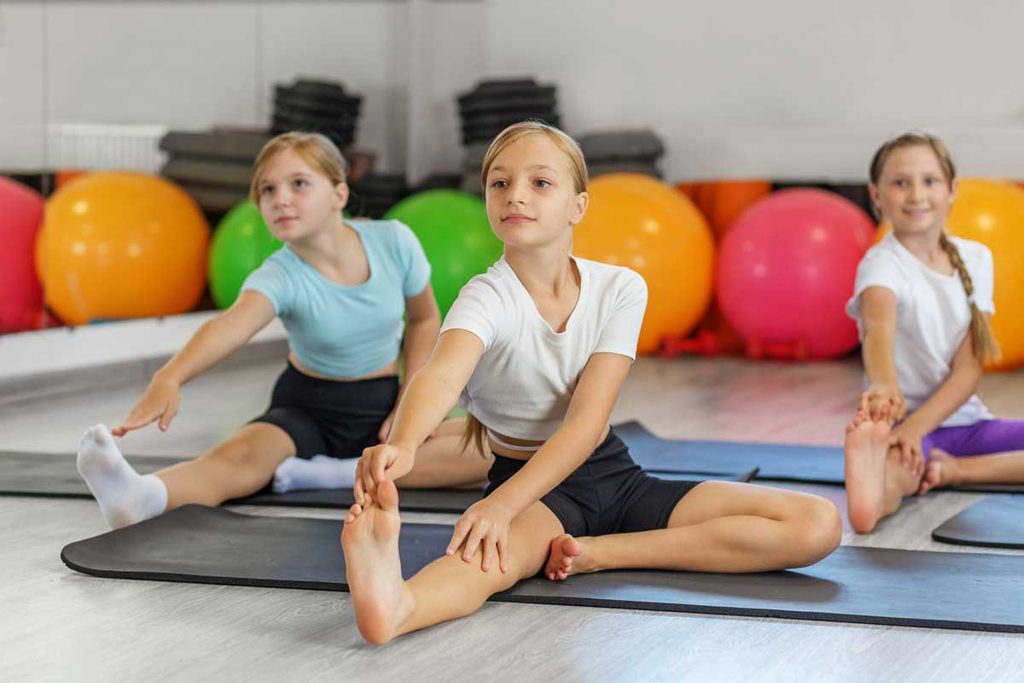
Choose a kids yoga mat in this order: check the space needed for the planned movements, compare comfort and grip on the practice floor, then try the carrying and care routine. A mat should give the child room to move, support their hands and feet in familiar positions, and be easy to carry between sessions.
Start with where it will be used. A mat kept at home, one carried to a weekly class, and a shared classroom set have different demands. Ask the instructor about class requirements before buying, especially if you already have an adult-size mat that might work.
| Use setting | Main buying considerations |
|---|---|
| At home | Movement space, behavior on the actual floor, and a place to dry the mat |
| Carried to class | Weight with the bag, packed size, and a closure the child can manage |
| Shared at school or in a studio | Cleaning compatibility, drying and storage capacity, identification and replacement specifications |
Does a Child Need a Separate Yoga Mat?
A separate mat can help when a full-size one is awkward to carry, takes up too much room, or complicates classroom setup. It also gives a child an identifiable practice space. A suitable adult-size mat can still be useful; the deciding factors are its intended use, condition, and fit for the activity.
Keep the planned activity clear. Sitting on a padded play area and moving through standing yoga positions place different demands on a surface. For gymnastics, use equipment specified for deliberate falls or jumping. A yoga mat’s thickness alone does not establish fall protection.
For children joining a class, ask whether they will mainly sit, lie, kneel, or stand, and whether the mat needs to travel each week. These details make product comparisons more useful than choosing from an age label or a photograph alone.
Choose the Size Around the Movements
Start with the child’s height, then check the positions and transitions the class uses. Children of the same age differ in height and proportions. A mat that fits a seated activity may feel short when the child lies down, while a longer mat may still be too narrow for the planned hand placement.
With an adult present, use this fit check:
- Lay the mat flat on the intended floor, following any unpacking instructions. Clear nearby furniture and leave space around it.
- Check whether the child can lie comfortably with their head and heels on the mat, without curling up to fit.
- Try familiar, instructor-approved positions. Watch where the hands, knees, and feet land during transitions.
- Check the width. Repeated contact across a side edge is a reason to review the usable width and the movement being attempted.
Some movements extend beyond a mat. Provide the contact area the practice needs and keep the surrounding space clear; the child does not need to keep every movement inside the rectangle.
NEEU’s yoga mat range lists children’s options of 150 × 50 cm and 160 × 50 cm, approximately 59.1 × 19.7 inches and 63.0 × 19.7 inches. Use these product examples as starting points for a fit check. Our yoga mat length and width guide explains the wider size choices.
Allow for Growth and Carrying
A little extra length can allow room for growth, as long as the mat fits the practice area and stays manageable. Compare what the extra space adds: two mats with different lengths may have the same width, giving the child no additional room to either side.
Try both the packed mat and the open one. Check whether the child can carry it with their bag, manage the closure, and put it away without forcing it into an unapproved fold. A larger mat may work well at home yet be inconvenient for a walk to class.
Compare Comfort and Standing Support
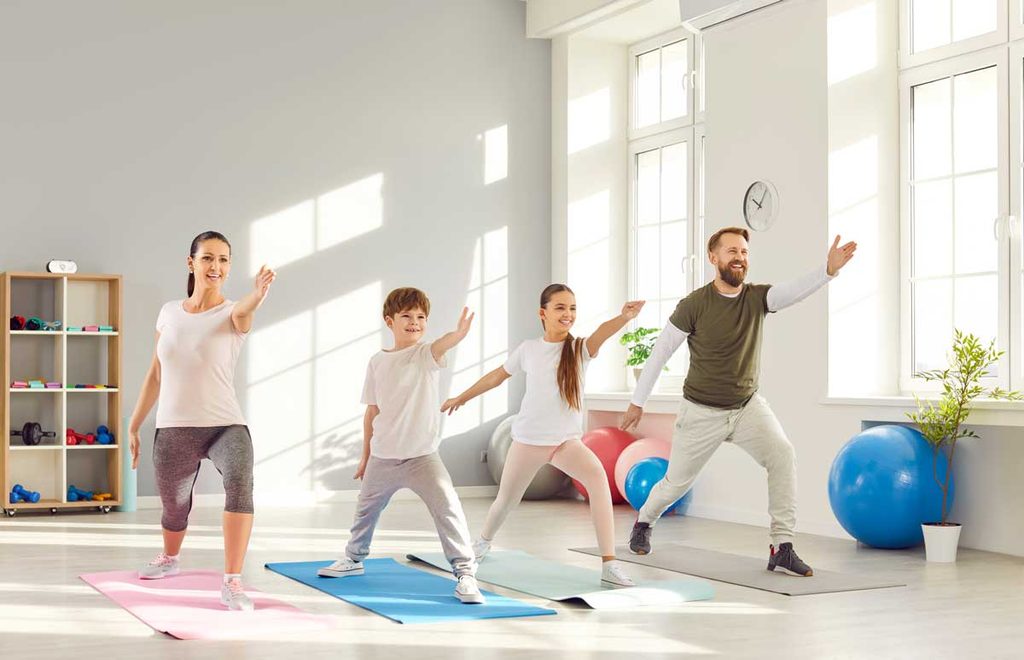
For a practice that includes sitting, kneeling, and standing, compare each of those uses. Notice pressure at the knees, how readily hands and feet sink into the surface, and whether the child can change position comfortably. Initial softness in the hand is only one impression of the mat.
Equal thickness can also conceal differences between constructions. In adult women tested on four specific equal-thickness yoga mats, pressure and balance measures varied between the samples.[1] This supports comparing finished constructions; it does not identify a preferred thickness or material for children.
When choosing between two thicknesses, consider comfort during floor contact, support during standing, and packed size. Our yoga mat thickness guide explains those general trade-offs. Treat its adult and B2B examples as background, not age-based children’s specifications.
Check Grip on Both Sides
Watch for two separate movements: hands or feet sliding on the top surface, and the whole mat shifting across the floor. An embossed or textured top tells you little about the underside’s grip against your flooring.
Use a clean, dry mat and floor. During familiar positions, observe both contact points and stop if the mat slides, creases, or bunches. If the manufacturer allows carpet use, assess it on that carpet; its support will differ from a rigid floor.
Keep these observations within the child’s usual ability, with adult supervision and instructor guidance where needed. Practical trials help assess fit and handling. Friction measurements, chemical compliance and impact claims require their own relevant evidence.
Compare Shortlisted Mats on the Same Basis
Keep the floor, cleaning condition, and familiar movement sequence the same for both candidates. This makes it easier to distinguish a product difference from a setup change.
Ask specific questions: “Does your knee feel comfortable here?” or “Can you move your hands without the mat bunching?” Record what you observe alongside the child’s preference. If the child likes a design but the mat shifts during ordinary use, keep looking for a product that meets both needs.
| What you notice | What to do next |
|---|---|
| Comfortable for sitting, awkward under standing feet | Compare another construction’s support during the planned sequence |
| Hands stay put, but the whole mat moves | Review the underside and compatibility with the intended floor |
| Enough length when lying down, repeated contact across a side edge | Recheck usable width and movement space |
| Works during practice, difficult to carry | Try a more manageable packed size, bag or closure |
Kids’ Yoga Mats to Compare Online in 2026
The following products offer three starting points for an online shortlist. Recommendations here are based on the linked sellers’ published specifications, checked on October 16, 2026, rather than hands-on testing. Confirm the selected design, delivery availability, and return terms before ordering.
| Product and official listing | Open size and thickness | Listed construction | Care or purchasing detail |
|---|---|---|---|
| Gaiam Kids Ballerina Yoga Mat | 60 × 24 in, approximately 152 × 61 cm; 3 mm | PVC | Spot-clean with a damp cloth, cold water, and mild detergent; dry flat. Gaiam’s purchase button directs buyers to Amazon. |
| Yoga Design Lab Kids Cork Yoga Mat | 60 × 24 in, approximately 152 × 61 cm; 4 mm | Cork surface with a natural rubber base; listed weight 3.5 lb / 1.6 kg | Wipe with a towel dampened with soap and water; air-dry. Roll with the designed side outward. |
| Yoga Direct Fun Yoga Mat for Kids | 60 × 24 in, approximately 152 × 61 cm; 1/8 in, about 3.2 mm | Foam; the listing does not identify the polymer formulation | Published quantity-pricing tiers make it worth comparing for a class set. Confirm the selected design’s availability and model-specific cleaning instructions. |
Which Would Be Worth Shortlisting for Your Child?
Gaiam Ballerina: consider it when you want to compare a thin PVC option. Its 3 mm thickness makes it thinner than the 4 mm cork construction below. That is a reason to try it, not proof of better standing support or easier carrying. Check knee comfort on the intended floor and ask for the mat’s weight and packed dimensions if the child will carry it to class.
Yoga Design Lab Kids Cork: consider it when you specifically want a cork contact surface. The listing identifies both the top layer and backing, making the construction easier to compare than a broad “natural mat” description. The listed 1.6 kg weight is worth noting for a child carrying their own equipment. Try the surface during a normal dry-hand practice; cork alone won’t replicate the grip your child will experience.
Yoga Direct Fun Kids: consider it when organizing a shared class set. Quantity pricing gives the organizer a concrete basis for comparing delivered set costs. Before a larger order, obtain one sample and confirm its material details, cleaning compatibility, and replacement availability. A quantity discount is useful only if the product also fits the class routine.
All three listings describe roughly the same practice area. Choosing between them will not solve a length or width mismatch: if the earlier movement-space check fails, look for another size. The useful differences here are construction, care, carrying requirements, and how you’ll purchase the mats.
Review the Material, Print and Edges
A material description helps identify what the mat contains, but the formulation and finished layers also affect its behavior. For example, changing the formulation of tested SEBS/PP compounds for children’s floor mats changed their hardness, strength, and stretch.[2] Those compound results are not a safety assessment of a finished yoga mat.
When buying, look for a clear description of the model’s materials, surface layers, and intended use. Our yoga mat materials guide provides a broader comparison. Claims such as “natural” or “eco-friendly” still need to explain what they mean for the actual product.
When buying online, confirm the open dimensions, the mat’s own weight, and the weight with any supplied bag. Check which print and construction the order includes, then read the return conditions before opening or trying the mat on your floor.
Use Design as a Practical Choice
Patterns and colors can make a mat appealing and help children recognize their own. Check that the print feels consistent to the touch and that the care instructions fit your planned routine. Printed hand or foot markers can be useful cues, but placement needs to suit the child’s proportions and the instructor’s guidance.
Inspect edges, attached decorations, and surface layers for tears, peeling, or loose pieces. On an interlocking product, include the narrow connections: pull-test method work on under-three children’s floor mats treats puzzle teeth as distinct test locations.[3] That is a reason to inspect those features carefully, not a home testing procedure or a standard for school-age yoga mats. Put a damaged mat aside and contact the seller.
Ask About the Finished Product
Before buying, confirm who the model is intended for, which activities it supports, and how to care for it. If a listing mentions a test report or certificate, ask whether it identifies the same model, print, and construction being supplied.
For U.S. purchases, certification requirements depend on the applicable children’s product safety rules and their testing provisions and exceptions. The CPSC’s Children’s Product Certificate guidance explains the product identification and supporting information. A document for one model should not be assumed to cover a supplier’s entire range.
Unpacking and Odor
Follow the manufacturer’s unpacking instructions and provide suitable ventilation. If an odor remains objectionable, put the mat aside and ask the seller for product-specific advice or a return. Stop using it if it causes discomfort, and avoid heating the mat or adding fragrance to address an unexplained smell.
A fading smell does not establish chemical compliance. The EPA’s indoor air quality guidance explains why controlling pollution sources and improving ventilation have different roles.
Make Cleaning and Storage Part of the Purchase
Read the care instructions before choosing, particularly if the mat will be shared. Check that its surface and print can handle your routine. Permission to wipe a mat does not mean you can soak it, machine-wash it, or steam-clean it.
For routine care, remove loose dirt, clean both sides as directed, remove cleaner residue where required, and let the mat dry fully before packing. Use products compatible with the finished surface. Adults should handle cleaning chemicals.
CDC home-cleaning guidance distinguishes cleaning from disinfection and emphasizes using appropriate products and following label directions. Schools and shared classes should follow their facility’s policy alongside the mat manufacturer’s care instructions. When disinfection is required, confirm surface compatibility and the specified contact time.
At home, decide where the mat will dry and be stored. For more on moisture at the edges, joints, and underside, see our foam mat water-resistance and cleaning guide.
Use the model’s approved rolling or folding method and check that the bag fits without forcing the mat. Our folding and rolling guide explains the differences in packing. After care, check with the supplier about any persistent new slipperiness or stickiness before returning the mat to use.
Buying for a Class or Developing a Children’s Range
Try a complete sample before ordering a set. Include the bag, identification method and care instructions, and involve the instructor or staff who will use them.
For a mixed-age class, check children near the shorter and taller ends of the group rather than assuming one size suits everyone. Include setup and pack-away time in the trial. Confirm there is room between practice stations, staff can see the mats’ condition, and doors and walkways remain clear.
Have staff clean, dry and store the sample using the planned routine. Then consider the whole set: how many mats can dry at once, where they will be stored, and whether they can be retrieved without damage. Use a manufacturer-approved identification method; add hanging holes only to products designed for them.
Keep the Specification and Evidence Together
Record finished dimensions, weight, thickness, surface construction, packing method, and cleaning requirements. Confirm how replacement mats will match those specifications, since a color name alone does not define a consistent classroom set.
Ask the supplier which substances or physical properties were assessed, under which requirements, and whether the documents cover the supplied finish and construction. Keep that evidence with the approved sample and the order details.
Opening several new mats together also makes room conditions relevant. Chamber measurements on selected EVA play-mat specimens showed that temperature, air exchange, and exposed sample area relative to chamber volume affected measured emissions.[44] These results support recording test conditions and planning ventilation; they do not establish classroom exposure or a fixed airing-out deadline.
For a branded range, agree on users and activities before selecting graphics or making performance claims. NEEU’s yoga mat range provides a starting point. Share the use setting, sizes, quantities, and care needs when discussing custom yoga mat specifications.
Frequently Asked Questions
A suitable adult-size mat can work if its intended use and condition fit the activity. Check movement space and handling; the extra room may be useful even if the packed mat is less convenient to carry.
Compare comfort during floor contact and support during standing, then consider portability. Age alone doesn’t determine thickness, and extra padding doesn’t guarantee protection from injury.
Check its intended use and the movements you plan to do. A surface used for sitting may compress, shift, or separate differently during standing practice. Ask the manufacturer or instructor if its suitability is unclear.
Stop using a mat with tears, peeling layers, or loose pieces and contact the seller. Persistent slipping or edges that no longer lie flat after the recommended care and unpacking routine also warrant a discussion about a replacement.
Research References
- Liu Xin et al. “A Study on the Effects of Different Materials of Yoga Mats on Key Biomechanical Indexes of Mat Exercise in Women.” Zhejiang Sport Science, 2024, 46(4):78-86. Adult participants and four specific equal-thickness mat constructions; cited for differences between the tested constructions, not children’s performance or injury outcomes. ↩︎
- Yan Shaomin. “Study on Properties of Special Materials for SEBS Children’s Floor Mats.” Green Petroleum & Petrochemicals, 2021, 6(3):25-29. SEBS/PP formulation experiments; not a test of finished yoga-mat safety. ↩︎
- Luo Junheng et al. “Discussion of Tensile Abuse Test Methods for Children’s Floor Mats.” Light Industry Standards and Quality, 2020(2):69-72. Interlocking floor mats intended for children under three; used to explain attention to connections, not to prescribe a home test or school-age yoga-mat standard. ↩︎
- Zeng Aifeng et al. “Volatile Organic Compound Emission Characteristics and Influencing Factors of Children’s Floor Mats Made from Different Materials.” Laboratory Testing, 2026, 4(10). Chamber measurements of selected play-mat samples, with environmental-parameter tests on selected EVA specimens; not a material safety ranking or household airing-out deadline. ↩︎