
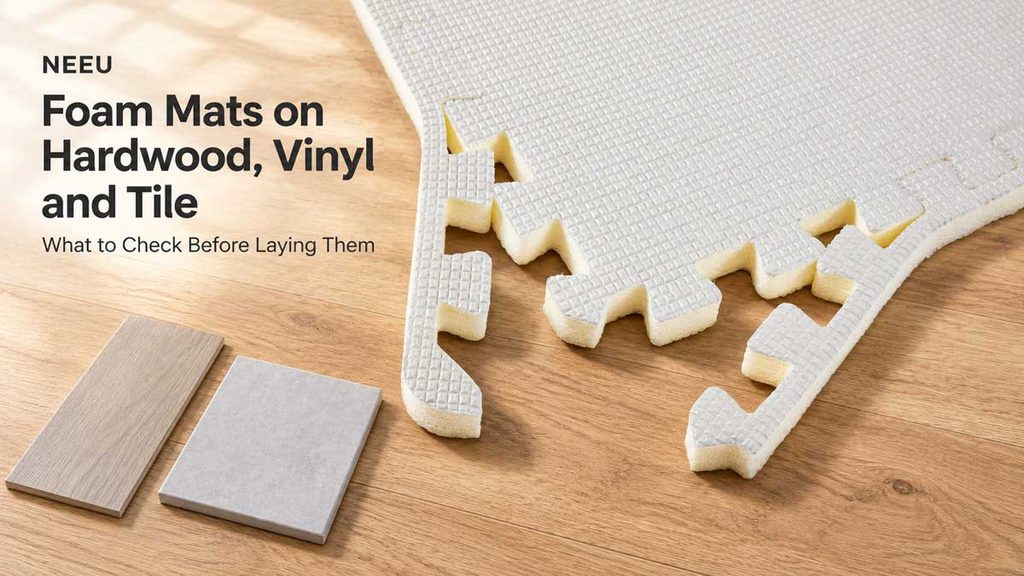
You can lay removable foam mats on hardwood, vinyl, or tile when the backing matches the floor and finish.** Check what touches the floor, whether you can leave the mat down between uses, and whether the area can be lifted for cleaning and inspection. A mat can stay in place and still leave a mark.
These checks apply to indoor foam tiles, folding mats and roll mats, not permanent flooring or lifting platforms.
Start With the Floor, Not Just the Mat Material
Identify what you are covering before buying. Wood-look planks might be hardwood, engineered wood, laminate, or vinyl; their appearance doesn’t indicate which care instructions apply. Look for an invoice, spare-board label, or product code. In a rented home, ask the property manager rather than guessing.
For wood, identify the finish and any recent refinishing. For tile, distinguish ceramic or porcelain from natural stone, and note grout or sealers. For vinyl, find the exact product line rather than relying on a general description like LVT or waterproof plank.
Next, turn the mat over. The floor may be bare foam, laminated film, fabric, rubber-like backing, printing, or adhesive. On a reversible mat, either side can be the contact surface. The foam core name alone does not describe that contact.
| Existing floor | First checks | Pause before laying if… |
|---|---|---|
| Solid or engineered hardwood | Finish type, permission to cover, moisture and debris | The finish is still curing, boards are damp or distorted, or backing compatibility is unknown |
| Vinyl sheet, LVT or rigid-core vinyl | Product-specific backing restrictions and non-staining requirements | The contact material is prohibited, or the supplier cannot identify it |
| Ceramic or porcelain tile | Loose tiles, raised edges, grout condition, dryness and underside grip | The base rock has sharp damage, or repeatedly becomes wet |
| Natural stone tile | Stone type, sealer and permitted cleaning/contact materials | A sealer is curing, or the proposed cleaner or backing is unsuitable |
| Any heated floor | Heating system and flooring instructions for additional coverings | You do not know whether the system allows the mat and any pad beneath it |
Can You Lay It Now?
- Go ahead with a small section when the floor and mat instructions allow the combination and you can meet their conditions for covering, cleaning and use.
- Choose a different mat or location if either set of instructions rules out the backing, accessory or intended use.
- Hold off and ask if you cannot identify the floor or backing, the instructions do not address the combination, or the two suppliers give conflicting advice.
Send both suppliers the flooring and finish details, mat model and backing description. Ask: Can I leave this mat, with this backing, on this exact floor finish between uses? Mention any heating, separate underlay or equipment you plan to leave on top. A hidden patch is not a way to override a restriction.
Foam Mats on Hardwood Floors: Protect the Finish as Well as the Wood
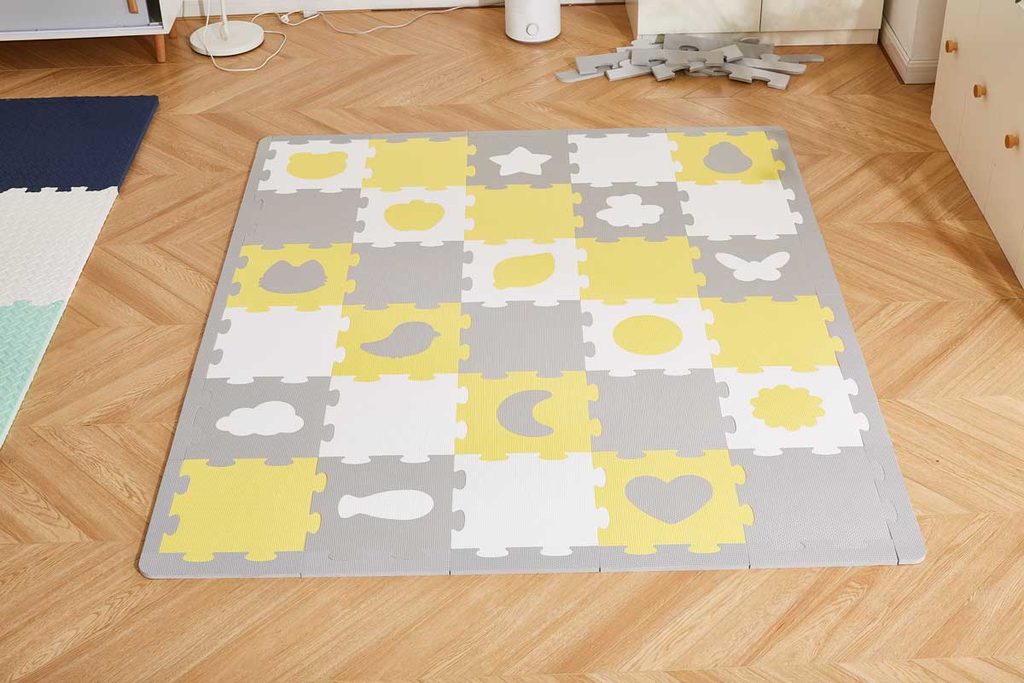
Remove grit before covering the floor
A foam mat is not a substitute for cleaning underneath it. Sand or hard particles caught between the mat and floor can abrade the surface when the mat moves. Clean both contact faces using the appropriate methods, and lift sections instead of dragging a large assembled mat across the room.
Water deserves equal attention. The National Wood Flooring Association’s care guidance identifies standing water as a cause of finish damage, discolouration, and changes in the wood. A spill that disappears beneath a mat still needs attention, even when the exposed top wipes dry.
Wait for permission to cover a refinished floor
Being ready for foot traffic isn’t the same as being ready for a mat. Fresh finishes have their own curing and covering requirements. For example, Bona’s floor-finish specification distinguishes between walking on the surface and replacing rugs after it fully cures.
Ask the installer which finish was used and when covering is permitted under the actual room conditions. Don’t rely on an online waiting period or judge cure by touch alone. Also check recently applied oils, coatings, and maintenance treatments before covering.
Do not assume every color difference is a stain
A covered rectangle can look different because the surrounding wood has received more light. Light-related ageing, moisture effects, transferred material and changes in gloss need different investigations. Photograph the area before installation so you have a useful comparison later.
Follow the floor maker’s advice about light exposure and repositioning coverings. Moving a mat periodically does not guarantee uniform color, and deliberate sun exposure is not a reliable home repair for an unexplained mark.
Foam Mats on Vinyl Flooring: Check the Actual Backing
Vinyl flooring instructions can disagree on the same backing material. Mannington’s ADURA Rigid care instructions exclude rubber, latex and coco-fibre backings. Congoleum’s mat guidance recommends non-staining mats with a 100% latex backing. Use the instructions for your own flooring range; neither example settles the question for another product.
Ask for non-staining information that names the backing and floor surface. Labels such as “EVA,” “PVC-free”, and “non-toxic” don’t tell you whether the finished underside will mark that floor.
A plasticiser can transfer from plasticised PVC to polyethene in close contact, and the amount depends on contact time and temperature.[1] That specific material pairing explains why contact conditions matter. It does not tell you whether your mat contains that additive or whether a yellow mark on your floor came from it.
Foam Mats on Tile Floors: Check Support, Grout and Surface Treatment
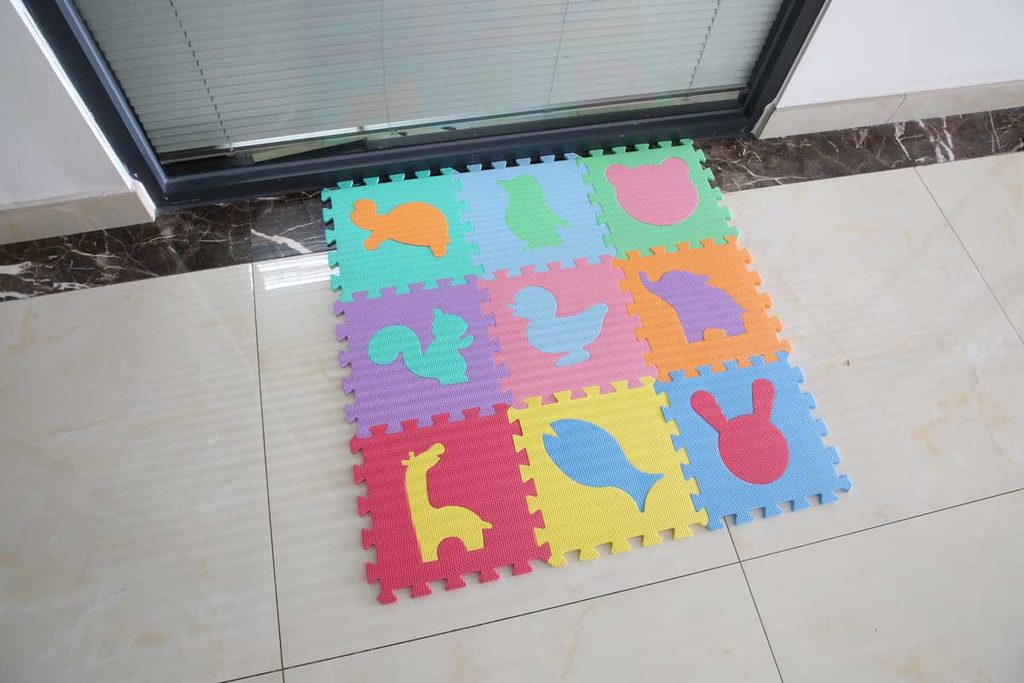
Ceramic and porcelain tile can provide a firm base, but inspect the installation before covering it. Look for loose tiles, cracked edges, raised joints, and noticeable height differences. Don’t use a foam mat to conceal a damaged floor or make an uneven base acceptable by adding thickness.
Check how the mat sits across grout lines and tile edges. If a raised tile makes the mat rock or leaves an edge unsupported, address the uneven floor rather than wedging scraps beneath the mat. For a bathroom or entrance that stays wet, choose a mat intended for that exposure instead of relying on the tile beneath it.
Natural stone needs a separate care decision
Marble, limestone and other stone surfaces should not be treated as interchangeable with glazed ceramic tile. The stone and any sealer affect care. Daltile’s natural-stone guidance warns that even diluted vinegar can etch many stone types.
Use the cleaner permitted for the floor, not a homemade mat-cleaning solution that may run underneath it. Ask when new grout or sealer may be covered, and let approved cleaning dry completely before replacing the mat. Do not apply another sealer simply to make an uncertain mat backing acceptable.
Lay a Small Section Before Covering the Room
Once you have a permitted combination, clean the floor and mat underside separately, following their care instructions. Let both dry and photograph any existing scratches or dull patches. If the manufacturer requests a contact check, use a spare piece of flooring with the same finish, if possible. Use an inconspicuous installed area only if the instructions permit it.
- Check the fit before use. Lay an unaltered section as directed. It should lie flat, with no curled corners or rocking edges. Check that doors clear the mat and that the exposed edges do not create a trip hazard on a walking route.
- Watch what happens during normal use. Grip under a foot is different from grip between the mat and the floor. If the whole mat shifts, stop using it there. Do not try to reproduce the movement by jumping or dragging the mat. For tiles that slide as a unit or separate at the seams, see how to keep interlocking foam mats together.
- Lift the section at the advised inspection point. Compare the floor in the same light as the starting photo. Check for dampness, tackiness, color transfer, pressure marks or a change in gloss. Leave the area uncovered if anything has changed and follow the troubleshooting table below.
A short trial can reveal an immediate problem, but it can’t prove the floor will stay unchanged for months. If the instructions do not say when to check underneath, ask before leaving the mat down for extended periods. Lay out larger areas so you can lift sections without dragging them or moving heavy equipment.
Should You Put a Rug Pad, Sheet or Tape Under Foam Mats?
Only add a layer when the complete installation accepts it. A rug pad introduces another material against the floor and another interface where movement can occur. A loose sheet may wrinkle, alter support or interfere with drying. Neither is automatically a protective barrier.
Confirm four things before using an underlay:
- It is compatible with the floor finish and the underside of the mat.
- It stays flat and provides the support required for the activity.
- Its cleaning, drying and removal requirements are workable.
- It is permitted with any underfloor heating.
Don’t treat felt, mesh, fabric, or a clear plastic sheet as a universally safe solution. Even an accessory described as non-slip still needs a separate check for staining and surface effects.
Use tape only if the mat and floor instructions allow it and specify how to remove it. “Removable” does not promise a clean release from every finish. If you are adding a transition strip or other fitting over a floating floor, check that floor’s installation instructions before fastening anything. Do not pin the planks in place to hold the mat.
Heated Floors Need Approval for the Complete Assembly
A floor approved for underfloor heating is not automatically approved for an insulating foam covering on top. The extra layer changes how heat leaves the floor. Warmup’s guidance on coverings over its heating mats warns that thick mats can restrict heat transfer and leave the covered area warmer than surrounding areas.
Before covering a heated zone, check what the heating and flooring manufacturers allow over the finished floor. Ask whether there is a thermal-resistance limit for the mat plus any underlay, or an area that must stay clear around a floor sensor. Turning down the thermostat does not make an unapproved covering suitable.
Report direct sunlight as another condition, particularly beside large windows. Keep the mat within its environmental limits and follow the flooring instructions for sunlight and temperature. A successful check in a cool corner does not establish suitability in a sun-heated area.
Check Underneath During Everyday Use
Make underside inspection part of the routine, with frequency based on the product instructions and room conditions. Check after spills, wet cleaning, heating changes, or relocation. A packed-away exercise mat used daily gives you different access than a large play area left assembled.
Where liquid may have reached underneath, lift the affected section safely, check how far it has spread and clean and dry both surfaces as directed. Do not simply cover the spot again once the top feels dry. Our foam-mat water-resistance and drying guide explains water entry through joints and edges in more detail.
If dampness returns without a known spill, stop covering the area and investigate the source with the flooring installer or building-maintenance provider. A loose foam mat is not a treatment for a damp slab, leak or condensation problem.
What to do when you find a change
| Observation | Next step |
|---|---|
| Grit, dust or fine scratches | Remove debris using the approved method; investigate movement and how dirt is entering |
| Dampness, recurring musty odour or suspected growth | Leave the area uncovered and out of use while the moisture source and cleaning requirements are assessed |
| Tackiness, transferred colour, a backing pattern or altered gloss | Stop contact; record the floor, mat and products used before attempting stain removal |
| Persistent dents, cupping or lifted floor joints | Remove the load safely and have the floor condition assessed; do not hide it with thicker foam |
| A clean-looking color outline without residue | Ask about light-related ageing as well as contact effects; do not assume it will wash off |
These observations help describe the problem; they do not identify its cause on their own. Do not use solvents, bleach, steam, scraping or abrasive pads to remove an unknown mark unless the flooring manufacturer specifically authorises that treatment.
If the mat has stuck to the surface, stop pulling when you meet resistance. Ask for removal guidance before tearing the backing or lifting the finish. Keep the product code, order record and photographs for both suppliers.
Will Foam Protect the Floor Under Furniture or Gym Equipment?
Don’t assume a comfortable exercise mat also spreads loads. A narrow equipment foot and a person lying down apply very different contact conditions. Check the equipment’s installation requirements and the floor’s permitted load protection before putting a rack, bench or heavy furniture on foam.
Cross-linked polyethene foam can stay partly compressed after being held under compression, and its thickness can change as it recovers.[22] That tells you about the foam, not whether the floor beneath an equipment foot will dent. For machines or weights, compare foam and rubber flooring for home gyms before choosing a surface or adding layers.
For Brands and Buyers: Make Floor Compatibility a Specific Requirement
Give the supplier a defined use case rather than requesting a mat that is “safe on all hard floors.” Specify the intended flooring types and finishes, whether the mat stays down, the expected loads, cleaning routine, heated-floor use and any proposed accessory.
Agree what a compatibility assessment will cover before approving the sample:
| Record | What it should identify |
|---|---|
| Mat specimen | SKU, batch, underside material, coating, color and reversible face where applicable |
| Floor specimen | Actual flooring range, finish or sealer, and relevant cure/preparation condition |
| Contact conditions | Duration, temperature, pressure or loading, moisture exposure and cleaning conditions |
| Baseline and comparison | Record starting color, gloss and condition. Keep a matching uncovered floor sample under the same relevant conditions where practical. |
| Observations | Agree when to inspect after lifting the mat. Record tack, transfer, residue, impressions and changes in color or gloss against the baseline and comparison sample. |
| Decision | Acceptance criteria, permitted use, exclusions and the report or approval reference |
An uncovered comparison can help separate changes that also occur without a mat from changes that appear only under it. It cannot identify the cause of a mark on its own. Agree on the method with the suppliers or testing lab and limit any claim to the products and conditions assessed.
Keep the floor-contact results separate from chemical-compliance or emissions reports. Use the foam mat sample approval checklist to record the approved backing, floor types and use limits. Review the decision if the backing, coating, pigment, accessory or use changes.
If you are developing a household range, start with NEEU’s home and daily-use mat options, then share the floors and finishes you want the finished mat evaluated against.
Frequently Asked Questions
Not necessarily. Appearance doesn’t indicate the backing’s composition or compatibility with a finish. Ask for non-staining information relevant to the actual material pair rather than choosing by color alone.
Use the same identification and contact checks, but follow the laminate product’s own instructions. Laminate is not hardwood or vinyl, even when it looks similar. Do not transfer another floor’s cleaning permissions, backing approvals or moisture tolerance to it.
Research References
- Ouchi Y., Yanagisawa H., Fujimaki S. Evaluating Phthalate Contaminant Migration Using Thermal Desorption-Gas Chromatography-Mass Spectrometry (TD-GC-MS). Polymers. 2019;11(4):683. DOI: 10.3390/polym11040683. Controlled plasticized-PVC/PE contact experiments; not a staining test of finished foam mats on household floors. ↩︎
- Kmetty A., Tomin M., Barany T., Czigany T. Static and dynamic mechanical characterization of cross-linked polyethylene foams: The effect of density. Express Polymer Letters. 2020;14(5):503-509. DOI: 10.3144/expresspolymlett.2020.40. Defined foam specimens and loading conditions; not a floor-protection rating for a commercial mat. ↩︎