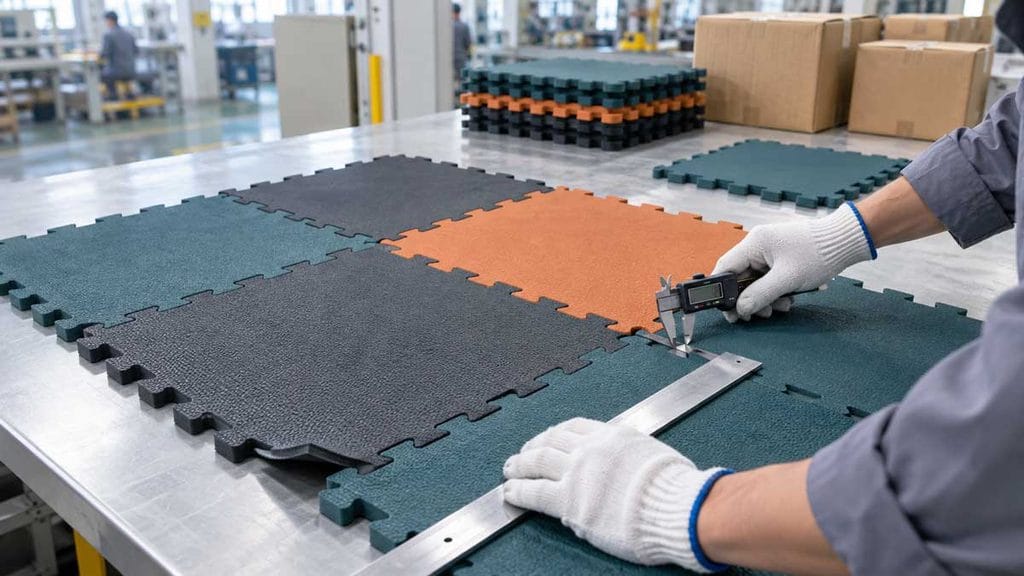
Foam Mat Dimensional Stability: Shrinkage, Expansion, and Size Tolerance
An interlocking mat can match its drawing at the cutting station yet still arrive with gaps, tight joints, or corners

Technical articles on foam mat manufacturing processes and quality assurance – covering compounding, foaming, cutting, shaping, surface treatment, lamination, and packaging preparation. Includes in-process quality control checkpoints, 100% final inspection protocols, physical and mechanical testing (density, hardness, resilience, compression set), and chemical safety testing (formamide, phthalates, VOC emissions). Designed for production managers, QA/QC teams, and sourcing professionals who need to understand manufacturing capabilities, verify process consistency, and evaluate supplier quality systems.
An interlocking mat can match its drawing at the cutting station yet still arrive with gaps, tight joints, or corners
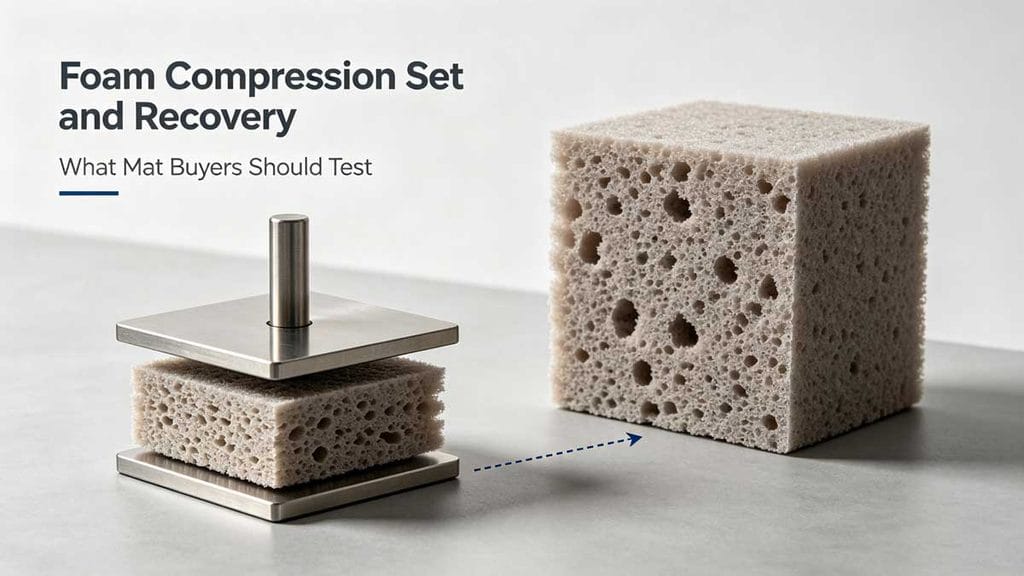
A foam mat can feel supportive when new, but it may develop a lasting dent after weeks of use under
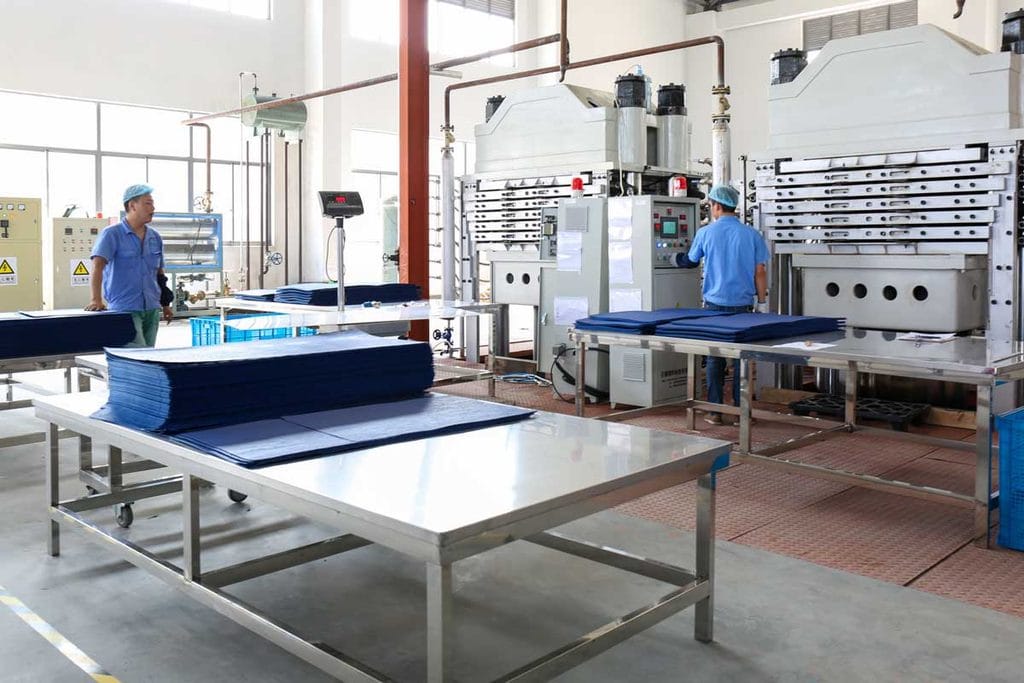
Foaming Methods Explained: Mechanical, Physical, and Chemical Foaming A foam mat begins with a material that can expand around gas