
Closed Cell Foam: A B2B Guide to Structure, Rolls, Types, and Mat Applications
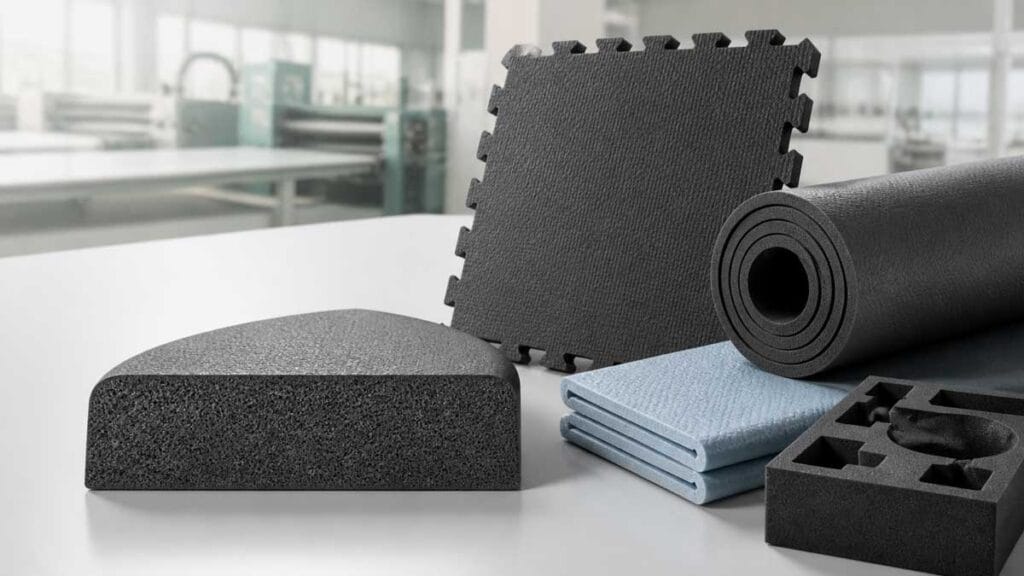
Closed-cell foam is a foam structure made of mostly sealed cells. Those cells can help a foam product resist moisture uptake, provide support under load, recover after compression, and remain practical to clean. For buyers, however, the phrase closed-cell foam is only a starting point. The polymer, density, hardness, thickness, surface, conversion method, and target application determine whether a finished foam mat, roll, sheet, or protective part will perform as expected.
This guide explains how closed-cell foam differs from open-cell foam, where common closed-cell materials fit, and how B2B buyers can convert a general material requirement into a workable product specification. It also shows where closed-cell structure matters in EVA foam mats, XPE mats, exercise mats, protective foam, and custom foam programs.
Important scope note: “Closed cell foam” describes a structure, not one universal polymer or one guaranteed performance level. Building insulation, automotive sealing, packaging, and foam mats use different materials, test methods, and acceptance criteria. Confirm performance using the finished-product specification and applicable test report rather than a generic foam claim.
What Is Closed Cell Foam?
Closed-cell foam contains individual gas-filled cells that are substantially enclosed by polymer walls. Compared with interconnected open cells, this structure generally reduces airflow through the foam and can reduce moisture uptake. It also gives many flexible foams a more supportive feel than typical open-cell cushioning foam.
For a foam mat buyer, the practical question is not simply “Is it closed cell?” It is:
- Does the material provide the required support and recovery?
- Does it remain dimensionally stable at the selected thickness?
- Is the surface suitable for dry grip, wet grip, cleaning, printing, or lamination?
- Can the finished product meet the buyer’s market, safety, packaging, and durability requirements?
The answer depends on the complete construction, not on cell structure alone.
Closed Cell vs. Open Cell Foam: The Practical Difference
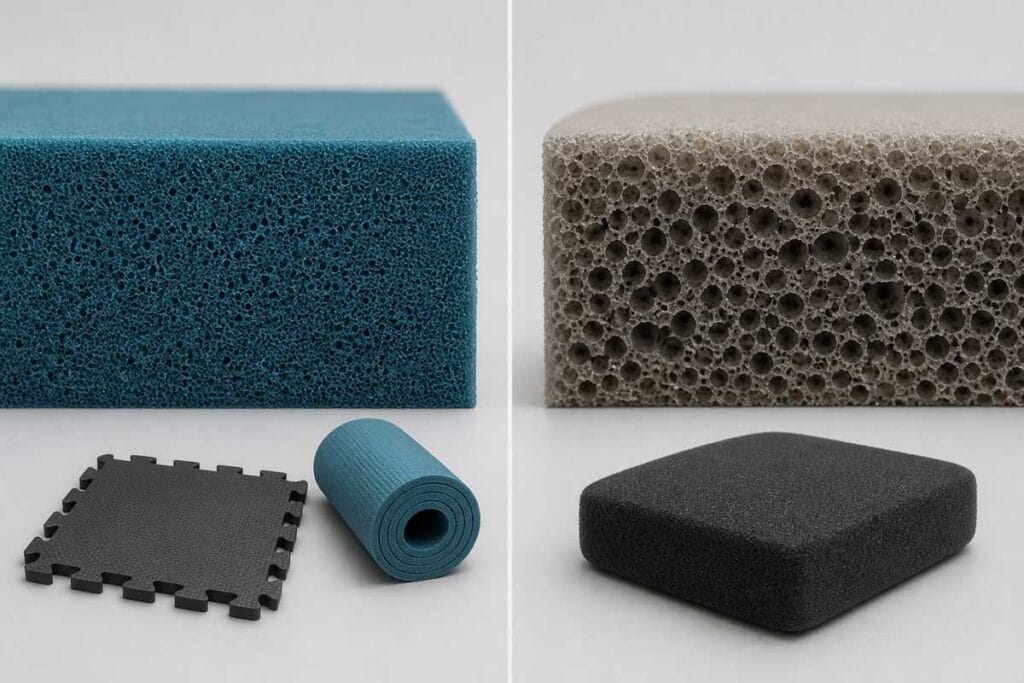
Closed-cell and open-cell foam should not be treated as interchangeable. Their cell structures often lead to different behavior in moisture exposure, load support, airflow, and acoustic use.
| Buyer consideration | Closed-cell foam | Open-cell foam |
|---|---|---|
| Cell structure | Mostly sealed, separate cells | Interconnected cells |
| Typical feel | More supportive and resilient at a comparable thickness | Softer and more compressible |
| Moisture behavior | Often lower water uptake, depending on the polymer and construction | Usually absorbs and retains moisture more readily |
| Airflow | Lower airflow through the material | Higher airflow through the material |
| Common uses | Foam mats, protective packaging, buoyancy parts, gaskets, and some insulation systems | Upholstery, bedding, acoustic absorption, soft cushioning |
| Buyer verification | Density, hardness, compression set, water absorption, and thickness tolerance | Density, indentation force, airflow, recovery, and acoustic test data |
Closed-cell foam is often a strong option where a product needs support, repeatable geometry, easier cleaning, or reduced moisture uptake. It is not automatically the best choice for every cushioning or acoustic application. For example, a product designed primarily to absorb airborne sound typically requires acoustically tested construction; a foam described only as “closed cell” is not a soundproofing specification.
Why Closed-Cell Structure Matters in Foam Mats
In the mat category, closed-cell construction can support four buyer priorities:
1. Support and Cushioning
The foam must distribute load while providing an appropriate feel. A children’s play mat, a gym equipment mat, and a yoga mat each need a different balance of firmness, thickness, and recovery. Density matters, but it does not replace hardness, compression set, or compression-force testing.
2. Moisture Management and Cleanability
Lower moisture uptake can make a foam construction more practical for surfaces that are wiped or exposed to occasional sweat, spills, or humid environments. It does not make every closed-cell product waterproof, antimicrobial, or maintenance-free. Surface contamination, seams, storage conditions, and cleaning practices still matter. Moisture control remains the key factor in limiting mold growth in indoor environments. The U.S. EPA explains this distinction clearly.
3. Dimensional Stability
For interlocking tiles, folding panels, and die-cut foam components, cell uniformity and conversion accuracy affect fit. Buyers should approve tile dimensions, teeth or edge geometry, flatness, thickness, and nesting compatibility before production.
4. Surface and Brand Presentation
Closed-cell foam can be embossed, laminated, printed, marked, or combined with other layers, subject to the selected material and process. For mat programs, surface texture and finishing influence perceived quality, grip, visual direction, and cleaning behavior. See NEEU’s Surface Treatment & Lamination capability for the relevant production stage.
Common Closed-Cell Foam Types and Where They Fit
“Closed-cell foam” is not a material family by itself. It is a structural description that can apply to several polymers. The table below provides sourcing context, not a promise that NEEU supplies every listed material.
| Material family | Typical closed-cell characteristics | Common market uses | Relevance to NEEU foam mat programs |
|---|---|---|---|
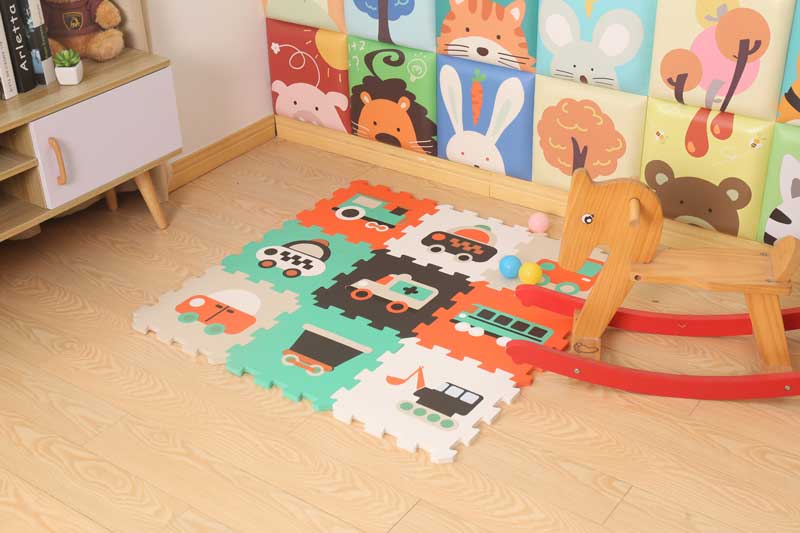
| EVA foam | Cushioning, flexibility, scalable density, and texture options | Puzzle mats, baby play mats, gym flooring, sports protection | Core material route for many interlocking and foam-mat programs |
| XPE foam | Fine cell structure, lightweight cushioning, foldable constructions | Foldable mats, protective foam, underlay, and packaging | Relevant to XPE foam mat and folding-mat applications |
| Polyethylene foam | Lightweight protection and consistent sheet or roll conversion | Packaging inserts, protective sheets, and some industrial foam parts | Relevant where a buyer’s project is protective foam rather than a finished consumer mat |
| TPE or PVC foam constructions | Performance varies by formulation and layered construction | Yoga, exercise, home-use, and specialty mat products | Evaluate by the complete product construction, not the label alone |
| Rubber, PU, polystyrene, and other foam systems | Can serve very different performance targets | Seals, insulation, specialized industrial products | Outside the normal NEEU foam-mat product scope unless specifically confirmed |
For a mat program, start with the intended use and then compare materials. A generic “best closed cell foam” request is not enough to develop a reliable product.

Is Closed Cell Foam Good for Insulation?
Some closed-cell foam systems are used for insulation because trapped gas and reduced airflow can increase thermal resistance. But insulation performance is material- and product-specific. R-value is measured for a particular product construction and test condition; it should not be transferred from a rigid insulation board or spray-foam product to an EVA play mat, an XPE folding mat, or a flexible foam roll.
If you are sourcing building insulation, obtain a product-specific data sheet and the required local compliance documentation from a supplier that actually manufactures that insulation system. If you are sourcing foam mats, focus instead on the performance measures that govern the finished mat: support, recovery, thickness tolerance, surface durability, odor or chemical requirements, and final inspection criteria.
How Density, Hardness, and Thickness Work Together
Density is an important purchasing parameter because it affects material consumption, weight, cost, and often durability. It is not the only performance specification.
A reliable foam-mat specification normally considers the following combination:
| Specification | Why it matters to a buyer |
|---|---|
| Material and foam structure | Establishes the base performance route and process options |
| Density range | Helps control weight, support, and cost consistency |
| Hardness or compression force | Defines how firm the product feels under use |
| Thickness and tolerance | Controls cushioning, pack size, fit, and product consistency |
| Compression set and recovery | Shows how the foam behaves after repeated load or storage compression |
| Tensile and tear performance | Relevant to edges, teeth, straps, folding zones, and repeated handling |
| Surface texture and friction | Affects grip, appearance, cleaning, and application fit |
| Dimensions and conversion tolerance | Critical for tiles, folds, die-cuts, inserts, and retail packs |
| Color, printing, lamination, and packaging | Converts material performance into an approved market-ready product |
Two mats with the same thickness can perform very differently. One may be soft but permanently compress after use; another may feel firm but lack the desired surface grip. Request a sample and agree on acceptance criteria rather than selecting based on thickness or density alone.
Closed Cell Foam Formats: Rolls, Sheets, Tiles, and Custom Parts
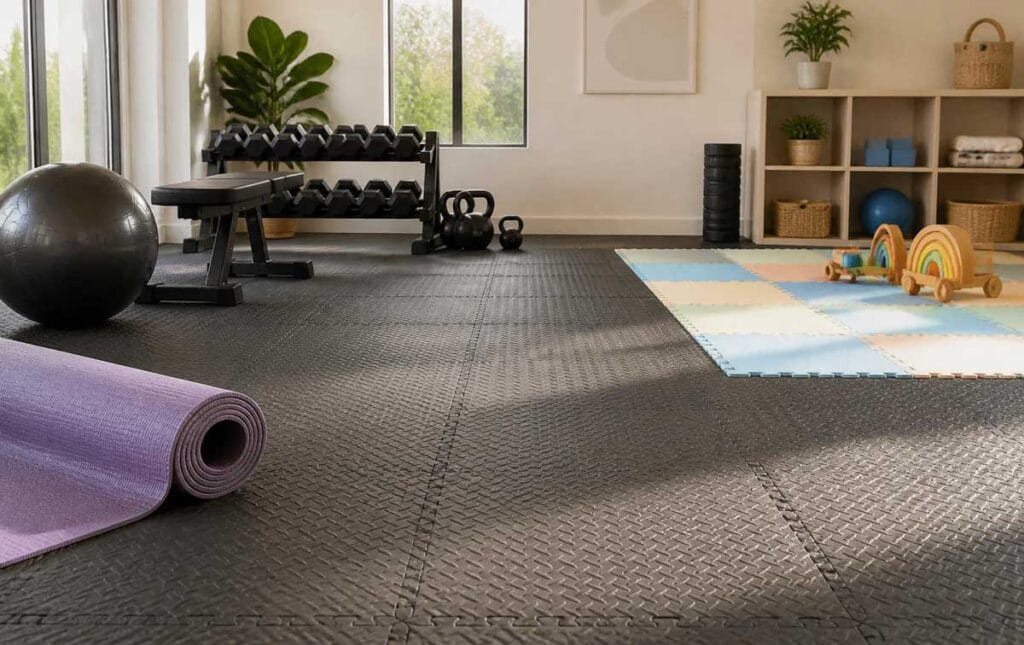
. Closed-cell foam can be converted into several formats. The format should be selected with the application, production method, packaging plan, and shipping efficiency in mind.
Foam Rolls
Foam rolls are useful for continuous material, long formats, or downstream lamination and cutting. For B2B buyers, confirm roll width, thickness tolerance, winding direction, surface protection, roll diameter, and loading method.
Foam Sheets and Blocks
Sheets and blocks are commonly used for die-cutting, contour cutting, lamination, or protective inserts. Buyers should confirm sheet size, flatness, color consistency, cutting allowance, and yield expectation.
Interlocking Tiles
Interlocking foam mats need more than a foam specification. Teeth profile, side borders, tile dimensions, mixed-color fit, edge finish, and set-level packaging all affect the customer experience. Review How to Customize Interlocking & Puzzle Foam Mats when the project uses a tile system.
Foldable Panels
Foldable mats require consistent fold lines, panel layout, recovery after folding, bottom-surface behavior, and suitable carry or retail packaging. See How to Custom Foldable Mats for a project-specific development route.
Custom Protective Foam Parts
For protective packaging, the key questions are product fit, shock exposure, compression recovery, cut tolerance, pack-out method, and batch-to-batch repeatability. A foam insert should be approved with the actual protected product wherever possible.
How is closed-cell foam used in Foam Mats?
This is where broad research on closed-cell foam becomes directly relevant to a foam-mat buyer.
| Application | Typical buyer priority | Useful discussion points |
|---|---|---|
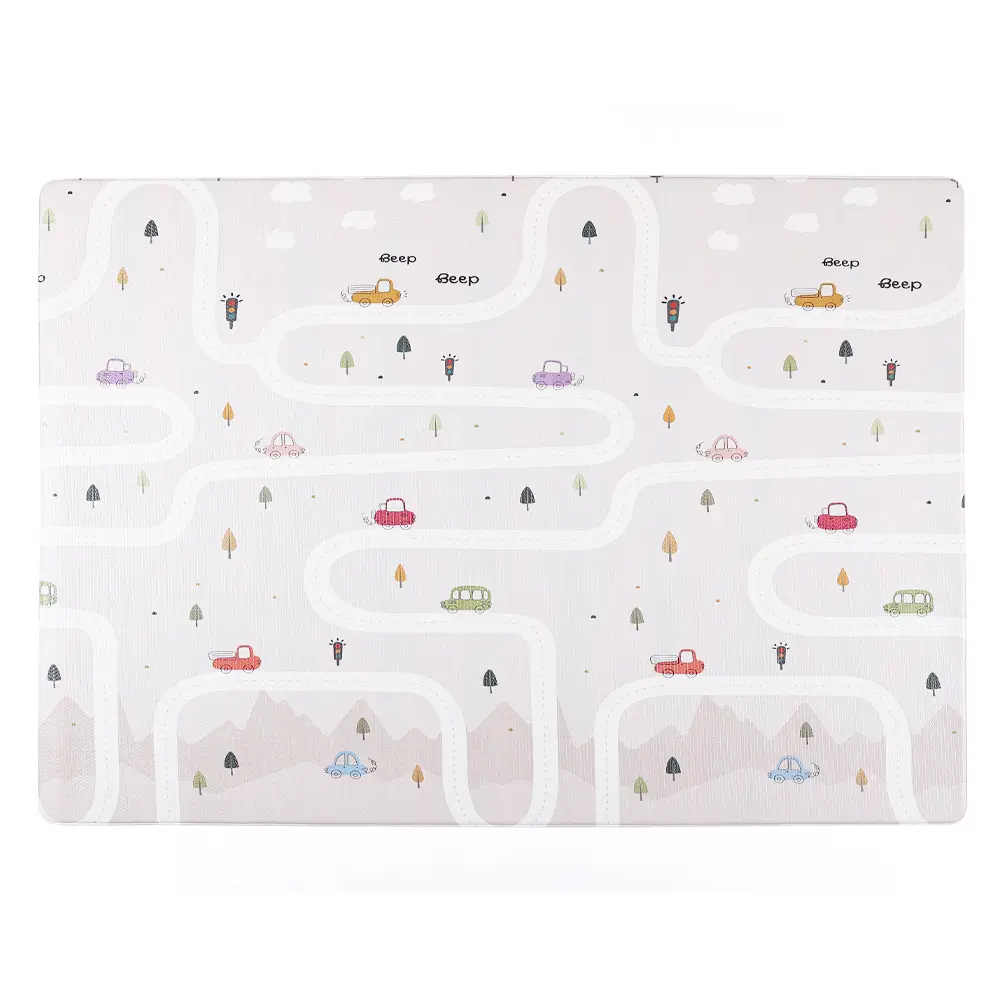
| Baby and kids’ play mats | Cushioning, cleanability, safety planning, and visual design | EVA or XPE construction, thickness, texture, inserts, formamide, and market-specific testing requirements |
| Interlocking gym or floor mats | Load support, tile fit, abrasion resistance, repeated use | Density, hardness, compression recovery, teeth precision, border pieces, mixed-color programs |
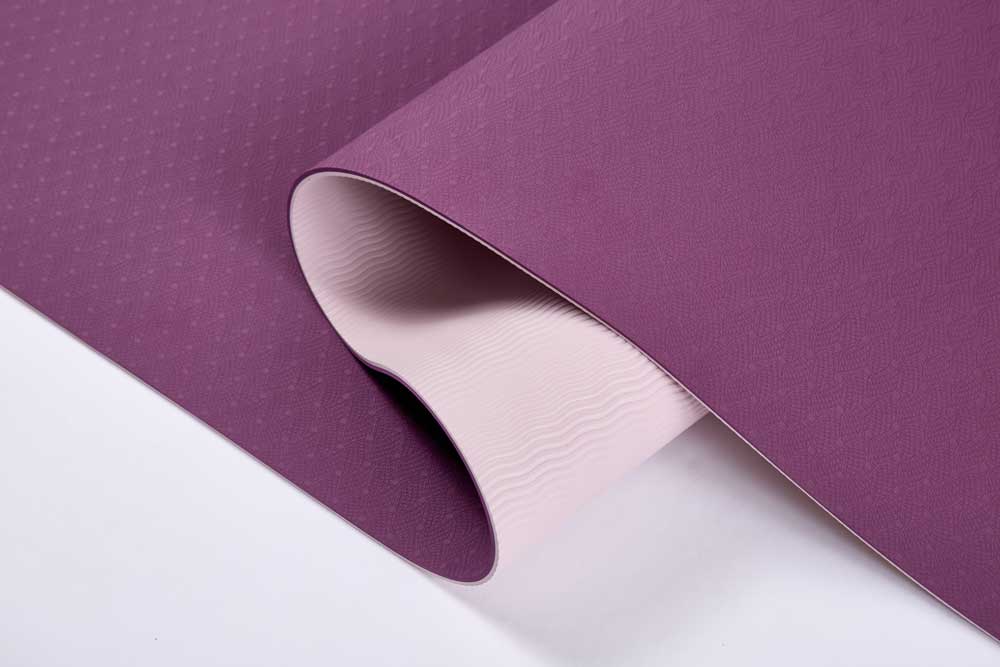
| Yoga and exercise mats | Grip, feel, flat lay, carry convenience, brand presentation | Material construction, texture, dry/wet-use expectations, thickness, printing, packaging |
| Foldable mats | Panel support, folding durability, portability | XPE or other appropriate construction, fold layout, bottom layer, carry accessories |
| Protective foam and packaging | Fit, cushioning, recovery, logistics efficiency | Material choice, cut tolerance, product dimensions, pack-out, carton design |
Explore NEEU’s Baby & Kids Play Mats, Interlocking Foam Mats, Yoga Mats, and Foldable Mats to move from material research to product format research.
B2B Sampling Checklist for Closed-Cell Foam Projects
Before mass production, use a sample approval process that connects material, product format, and target market requirements.
- Define the application. State whether the product is a play mat, gym floor, yoga mat, folding panel, protective insert, or another use.
- Confirm the construction. Agree on material, density range, hardness or compression target, thickness, dimensions, color, texture, and any laminated layers.
- Approve functional samples. Review feel, support, recovery, flatness, fold behavior, tile fit, grip, or protective fit under realistic use conditions.
- Plan compliance early. Identify the target country, consumer group, intended use, buyer standard, and applicable test program before finalizing artwork and production.
- Approve packaging. Confirm labels, barcode placement, inserts, bags, cartons, carton marks, and transit protection.
- Set final inspection criteria. Define what will be checked for dimensions, visual defects, foreign matter, cleanliness, assembly fit, and packaging completeness.
NEEU’s Compounding & Mixing and Foaming Process pages explain the upstream production stages. Its Quality Control page explains how finished-mat visual and packaging checks support shipment readiness.
Compliance and Documentation: Ask the Right Question
There is no universal “closed cell foam certificate.” Requirements depend on the polymer, the final product, the target market, the age group, the intended use, and the buyer program.
For example, a children’s EVA play-mat inquiry may require discussion of formamide and applicable toy or children’s product requirements. A yoga mat program may prioritize chemical restrictions, labeling, odor, surface quality, and retailer requirements. A BSCI audit addresses social compliance at a factory; it is not a finished-product test report. Likewise, CE marking applies only where the relevant EU product legislation requires it.
The practical approach is to provide the supplier with the destination market and buyer requirements, then agree on the applicable testing and documentation plan before mass production. Visit Certifications & Compliance for NEEU’s overview of compliance support.
How to Choose a Closed Cell Foam Manufacturer
Look for a manufacturing partner that can translate a product brief into a controlled specification rather than merely quote a generic foam grade. For a foam mat or protective foam program, ask:
- Which material and foam structure do you recommend for this application, and why?
- What density, hardness, thickness, and dimensional tolerances can you control?
- Which surface textures, laminations, printing, cutting, and packaging options are compatible with the construction?
- Which sample tests and final inspection points will be agreed upon before production?
- Which documents can be provided for the target market and the final product?
- Can the manufacturer support repeat orders from an approved reference sample and specification?
NEEU manufactures custom foam-mat programs across EVA, TPE, PVC, and XPE routes, with support for development, production, inspection, and export packaging. For projects involving interlocking mats, yoga and exercise mats, foldable mats, or protective foam applications, share the intended use, dimensions, target market, and reference sample or drawing. The team can help identify a practical material and product-development route.
FAQs on Closed-Cell Foam Procurement
A: Many EVA foam products used in mats have a closed-cell or predominantly closed-cell structure, but the actual foam behavior depends on formulation and processing. Confirm the finished material specification with the supplier.
A: Closed-cell structure can reduce moisture uptake, but “waterproof” is a product-level claim. It depends on the polymer, thickness, seams, surface layer, exposure conditions, and test method.
A: No. Higher density can support durability and load performance, but the correct density must be matched with hardness, thickness, recovery, intended use, and desired feel.
A: It can be useful in vibration-isolation or sealing applications, but it is not automatically an acoustic or soundproofing solution. Specify the required acoustic outcome and verify it with the appropriate test method.
A: Provide the application, target market, material preference if known, size, thickness, density or feel target, color, texture, artwork, packaging concept, estimated order quantity, and any required test or retailer documentation.
Discuss Your Foam Project
Need a closed-cell foam construction for a mat, protective foam component, or custom foam program? Send NEEU your application, target dimensions, performance expectations, destination market, and reference product. We will help convert the brief into a workable sampling and manufacturing plan.
Editorial Sources and Further Reading
- U.S. EPA: A Brief Guide to Mold, Moisture and Your Home
- U.S. EPA: Mold Course Chapter 1
- Product-specific test reports, buyer standards, and applicable regulatory requirements should take precedence over general educational material when a production specification is approved.