
Compounding & Mixing in Foam Mat Manufacturing
Precision weighing, high‑speed mixing, and digital recipe control – the first step to flawless foam mats.
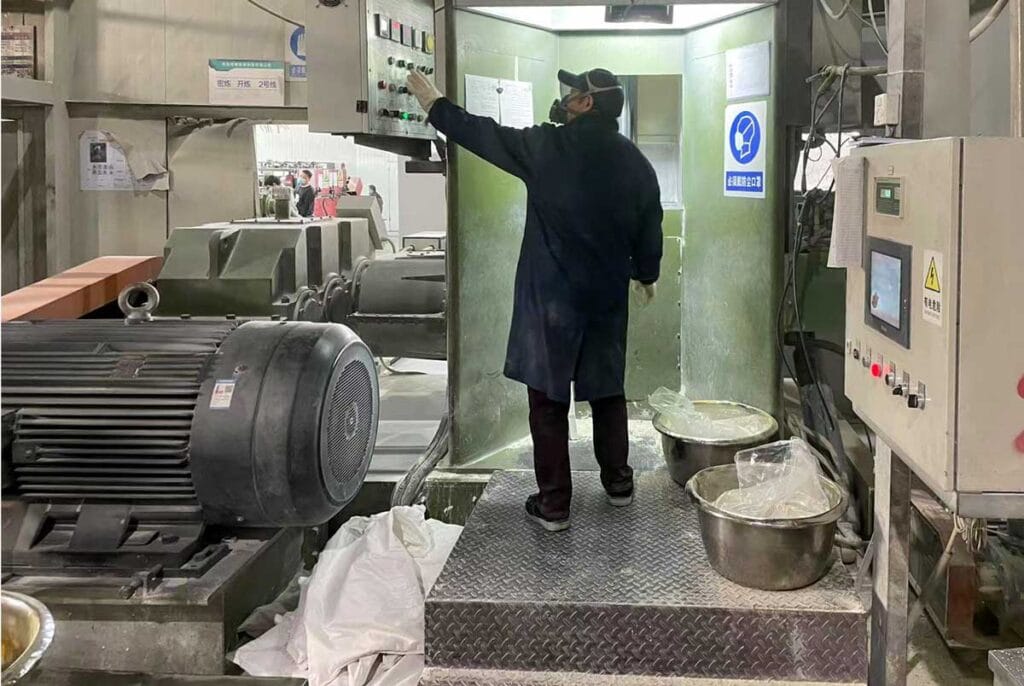
What Is Compounding and Mixing?
Compounding and mixing prepare the material formulation before foaming. Resins such as EVA, PE/LDPE, and PVC, or selected TPE compounds, are accurately weighed and blended with the additives required for each formulation. PE/LDPE resins provide the base for crosslinked polyethylene foam, including XPE. Depending on the production route, additives may include blowing agents, crosslinking agents, plasticizers, stabilizers, and color masterbatches. Uniform dispersion helps maintain batch consistency. Together with subsequent foaming and processing conditions, the formulation influences density, hardness, compression recovery, color, and durability. Chemical compliance requires verification of the relevant raw materials and finished products.
Why Compounding & Mixing Matters for Your Foam Mats
The compounding stage is where raw materials are combined into a precise, homogeneous blend, directly affecting your final product’s density, hardness, color consistency, and chemical compliance. Even minor deviations (±1% in formulation) can cause defects like uneven foaming, surface bubbles, or off‑spec physical properties.
- Supports Material Consistency
A more organized mixing process helps create a more uniform material base before foaming and further conversion. - Helps Improve Downstream Stability
When materials are prepared in a controlled way, later production stages can be carried out with better process coordination. - Contributes to Product Uniformity
Stable material preparation can help support more consistent performance in structure, density, thickness, and appearance across production runs. - Reduces Unnecessary Variation
Good control in the compounding stage helps reduce avoidable differences before materials move into foaming and shaping. - Supports Manufacturing Efficiency
A better-prepared material base can help production move more smoothly from one stage to the next.
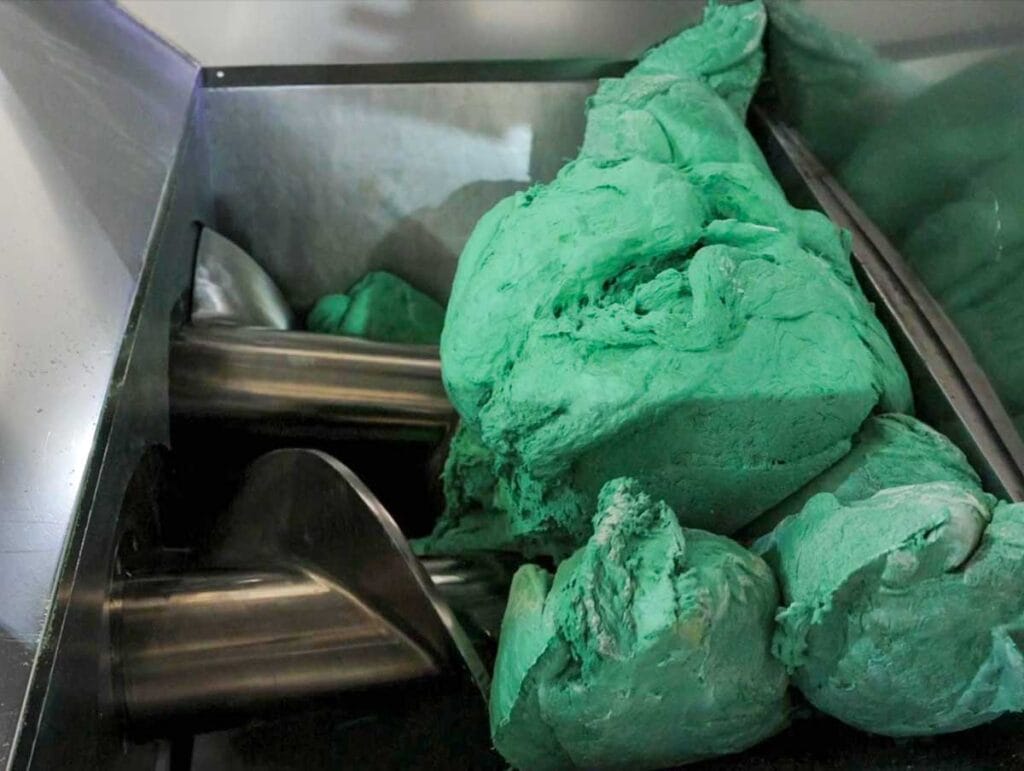
Materials We Compound for Foam Mats
NEEU‘s compounding lines are equipped to handle a wide range of thermoplastic and elastomeric materials, including:
| Material Category | Specific Material | Function in Foam Mat Production |
|---|---|---|
Base Resins & Compounds |
EVA, PE/LDPE and PVC resins; selected TPE compounds |
Form the polymer base of the foam and influence processing behavior and finished mat properties. |
Crosslinking Agents |
DCP (Dicumyl Peroxide), where required by the formulation |
Help form a crosslinked polymer network and control foam structure and properties. |
Blowing Agents |
Blowing agents selected for the material and production process(AC, ADC, or ADCA, etc.) |
Supply gas to form cells within the polymer during foaming. |
Plasticizers |
DOTP, DINCH (Phthalate-free) |
Flexibility of PVC Yoga Mats and Anti-slip Mats |
Stabilizers |
Calcium-Zinc Stabilizers, Eco-friendly Compound Stabilizers |
Thermal Stability and Aging Resistance |
Color Masterbatches |
Any Custom Pantone Color |
Achieve Precise Brand Color Matching |
Functional Additives |
Antistatic Agents, Antimicrobial Agents, Flame Retardants, UV Absorbers |
Meeting Specialized Application Requirements |
Ready to Optimize Your Foam Mats First Step?
Our compounding engineers can help you develop a custom formulation, troubleshoot existing recipes, or answer technical questions about batch consistency.Compounding & Mixing Workflow & Equipment
Precision compounding and mixing require both a scientifically controlled process and specialized machinery. The workflow below illustrates each stage of NEEU‘s compounding line, paired with the equipment that executes it. From weighing to pelletizing, every step is designed to eliminate variability, ensure full dispersion of additives, and deliver a perfectly uniform compound – the foundation of every high‑performance foam mat.
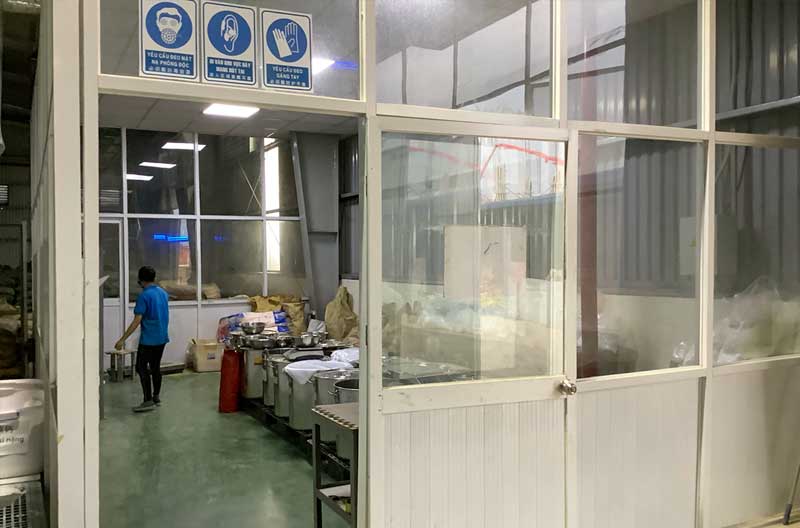
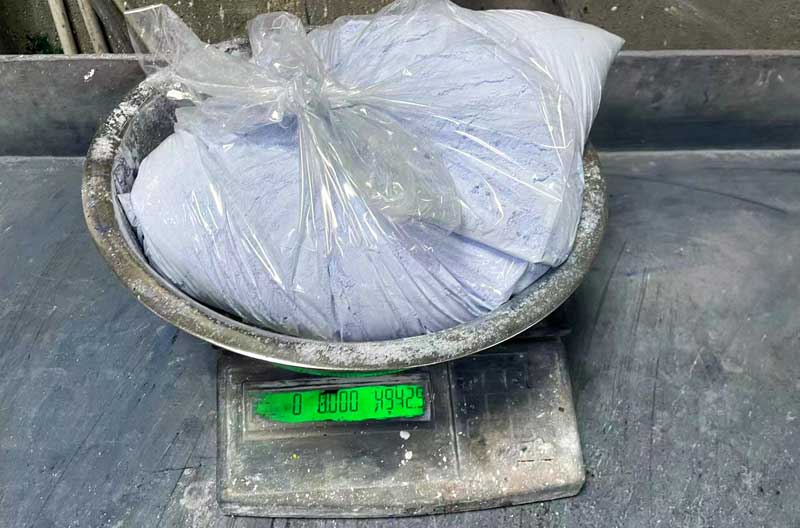
Step 1: Raw Material Weighing
Each component (resin, foaming agent, cross‑linker, plasticizer, stabilizer, color masterbatch) is automatically weighed according to the ERP‑locked formula.
- Equipment Used: Loss-in-Weight Automatic Metering System
- Key Values: Accuracy ±0.1%; batch-to-batch consistency.
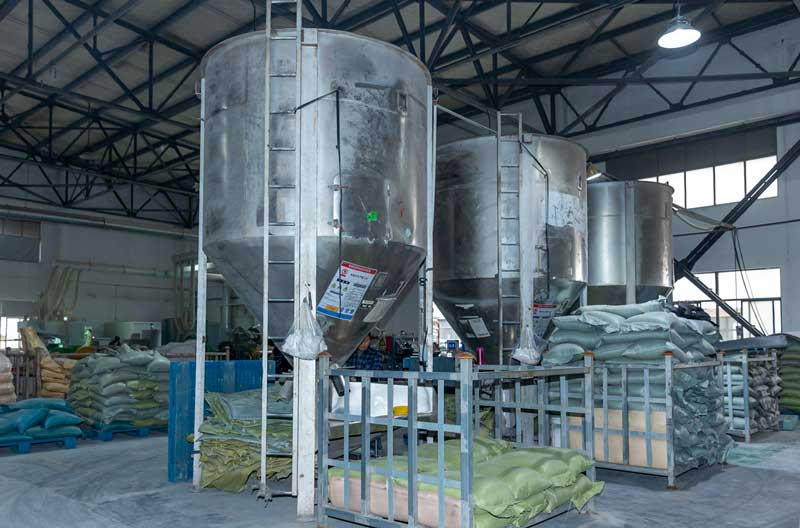
Step 2: Dry Premixing
Weighed materials are loaded into a high‑speed mixer for initial dry blending, ensuring macro‑scale uniformity before heating.
- Equipment Used: Mixer (High-Speed Mixer)
- Key Values: Eliminates local additive concentration and prepares the material for intensive mixing.
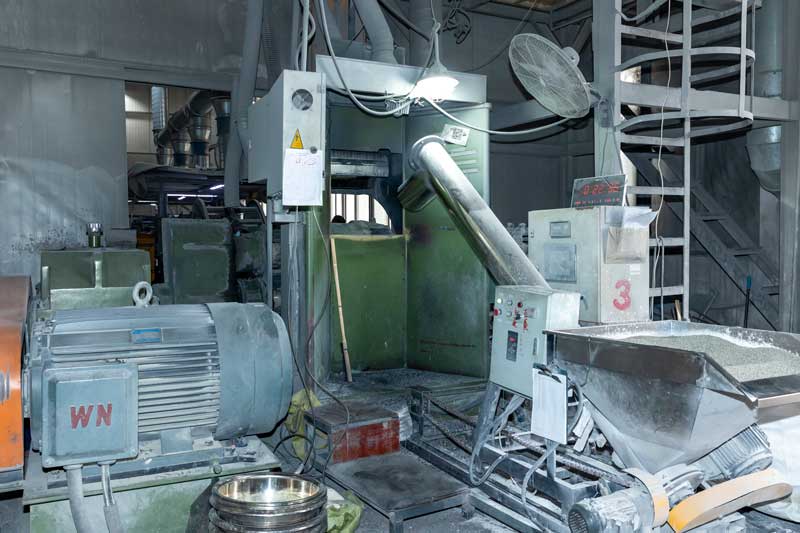
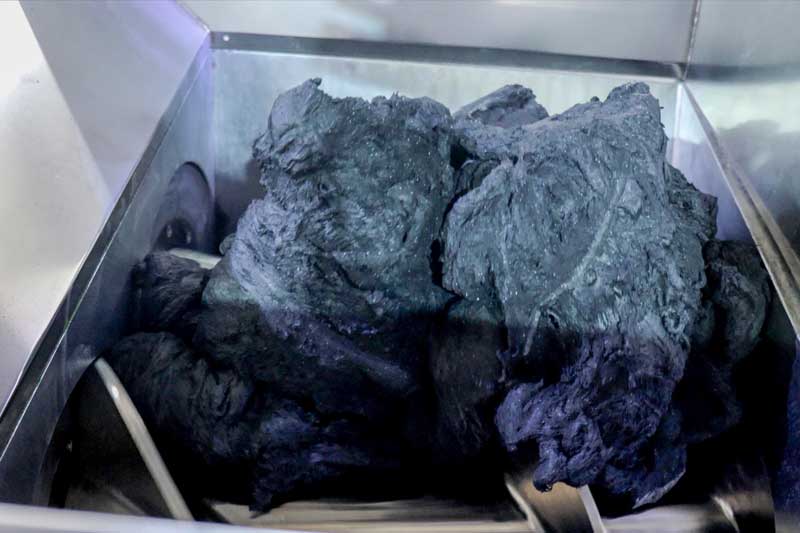
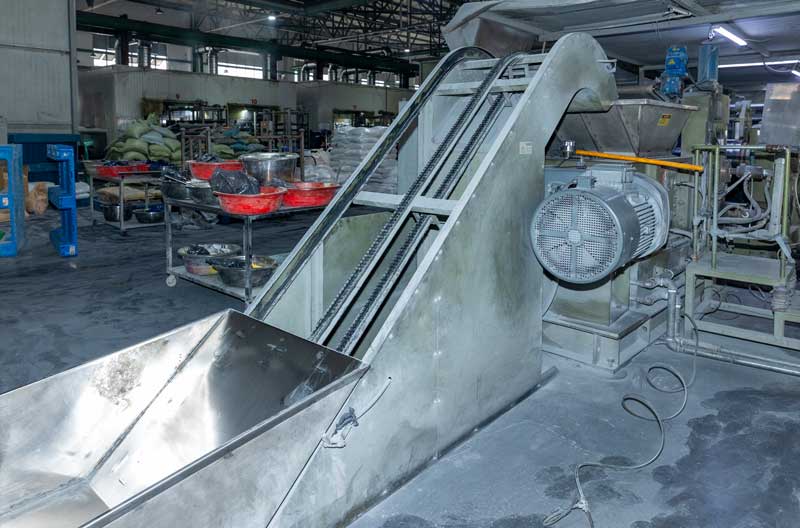
Step 3 Intensive Kneading (Melting & Dispersing)
The premix is subjected to high temperature and high shear, melting the resins and dispersing additives at a molecular level.
- Core Equipment: Internal Mixer
- Key Values:Determines cross‑linking degree, melt viscosity, and final foam properties.
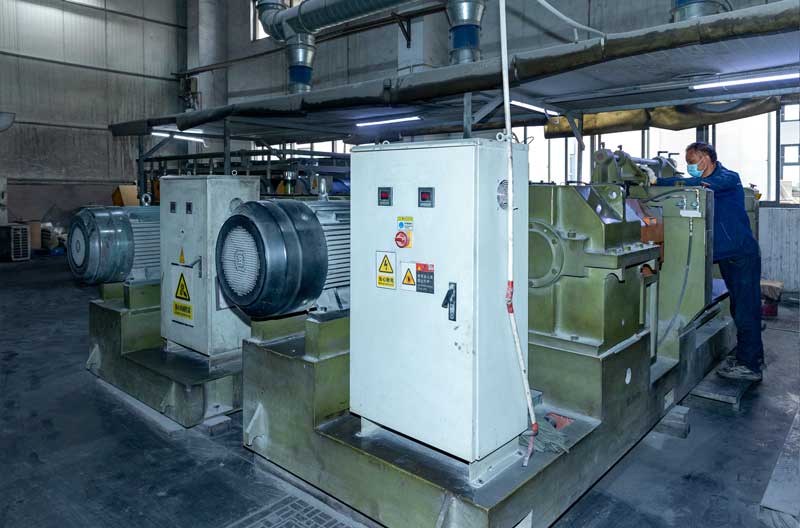
Step 4 :Secondary Mixing & Slicing
For formulations that require additional homogenization, the kneaded material is further worked and formed into a continuous sheet.
- Core Equipment: Two-Roll Mill
- Key Values:Eliminates micro‑un‑dispersed particles; produces uniform sheet thickness.
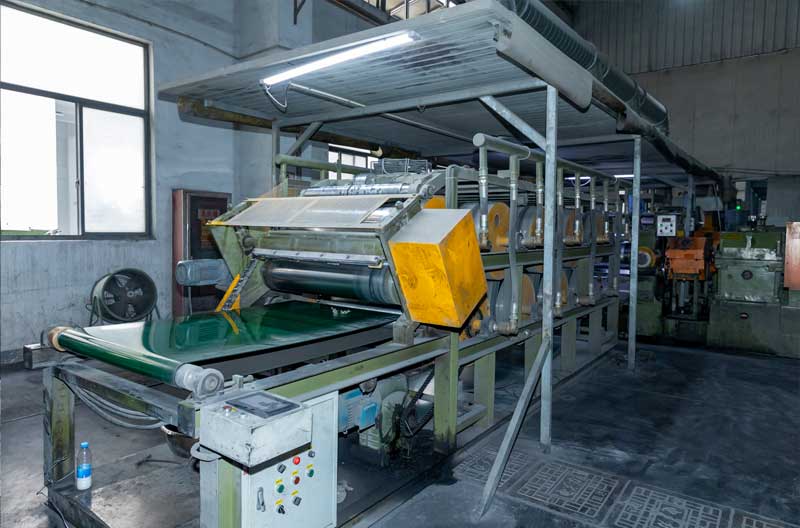
Step 5: Pelletizing or Direct Feeding
The homogeneous compound is either pelletized into free‑flowing granules (for later use) or fed directly to the foaming line.
- Core Equipment: Extruder
- Key Values: Ensures consistent melt flow; supports continuous production.
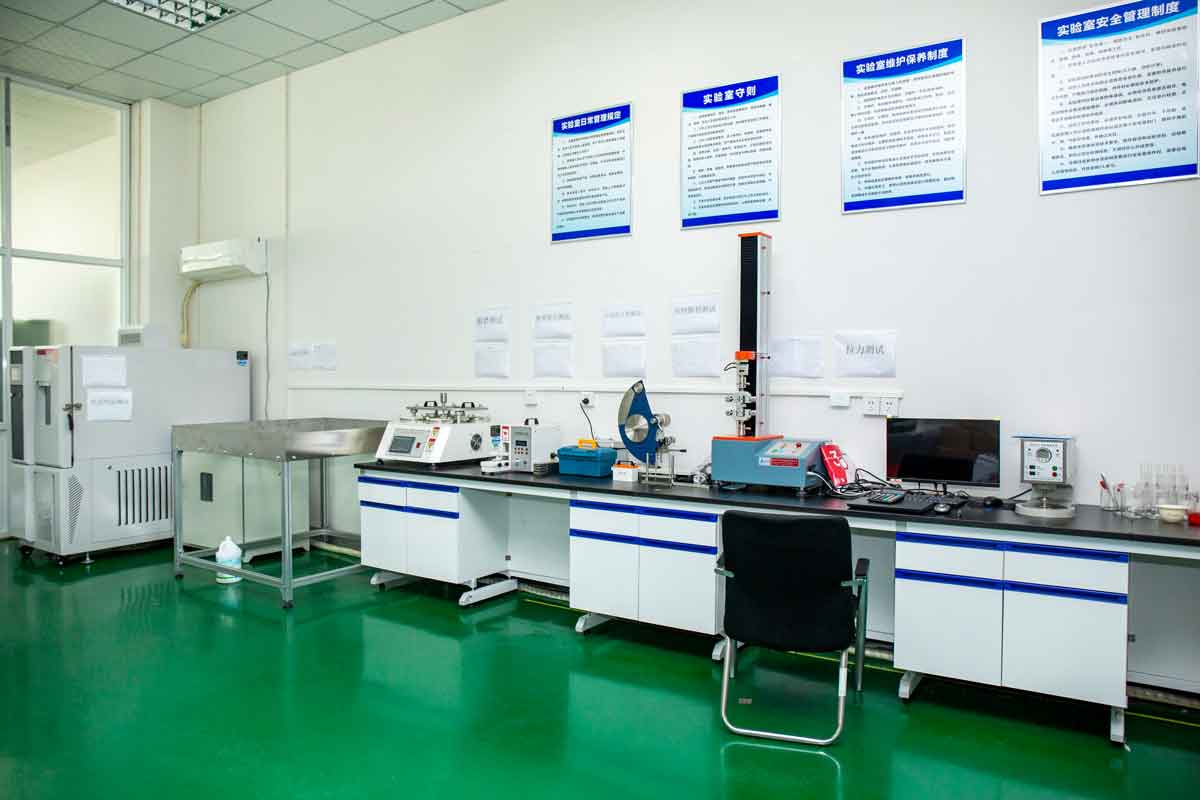
A sample of the compound is tested for density, melt flow index, color (ΔE < 1.0), and dispersibility.
- Equipment Used: Laboratory Testing Equipment (Densimeters, Melt Flow Indexers, Colorimeters, etc.)
- Key Values:Only batches meeting all specifications are released to foaming.
Explore More Production Stages
Want to see how this homogeneous compound becomes a finished foam mat?
Foaming Process
The homogeneous compound enters a continuous foaming oven where chemical or physical blowing agents create a uniform closed‑cell structure. This step determines the mat‘s density, resilience, and thickness tolerance (±0.3mm) – the core of its cushioning and durability.
Surface Treatment & Lamination
Mats receive functional surface treatments: embossing for anti‑slip texture, heat lamination for multi‑layer composites (e.g., EVA+non‑woven, EVA+cork), and coating for stain resistance. This stage adds both performance and aesthetic value.
Cutting, Shaping & Finishing
Foamed sheets are precision‑cut using CNC slitting and die‑cutting machines to exact dimensions (±0.5mm). Edge trimming, corner rounding, and interlocking teeth forming are completed here, ensuring clean geometry and seamless assembly.
Printing & Packaging Preparation
Custom logos, patterns, or alignment guides are applied via UV printing, heat transfer, or silk screen. Printed mats are then 100% visually inspected, cleaned, and packed into private‑label boxes, poly bags, or shrink wrap – ready for shipment.
Why Global Brands Trust NEEU

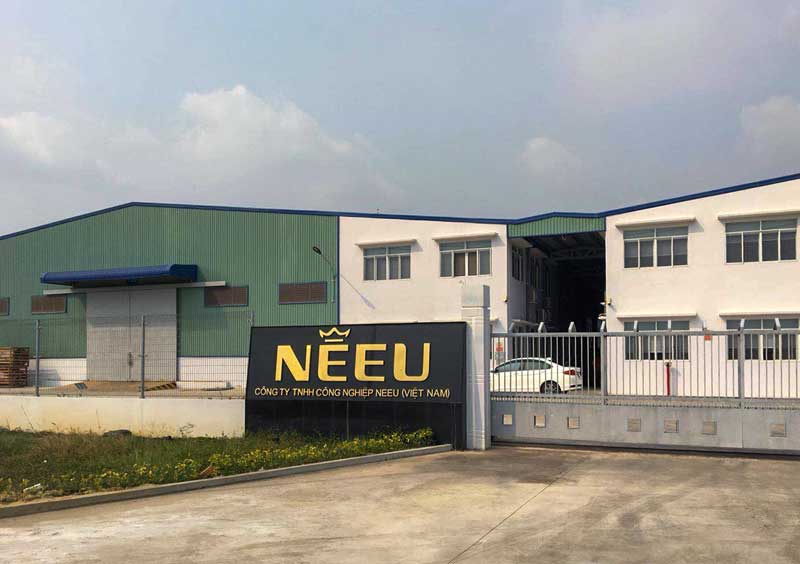
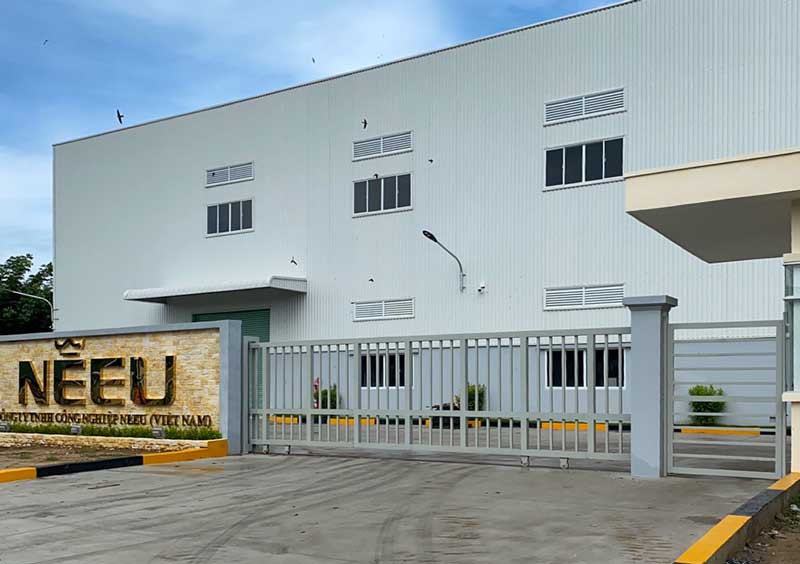
Behind every NEEU foam mat is a vertically integrated manufacturing operation spanning 75,999㎡ square feet across China and Vietnam – equipped with automated foaming lines, dust-free workshops, and 620+ skilled technicians. We hold ISO 9001, BSCI, EN71, ASTM F963, CPSIA, REACH, and Walmart/Target/Disney compliance certifications that matter to European and the United States retailers. Every mat undergoes 100% final inspection for cleanliness, foreign objects, and packaging integrity. From raw material sourcing to batch traceability, NEEU delivers consistency, compliance, and scalability. Want to see our full capabilities?

Frequently Asked Questions About Compounding & Mixing
How do you ensure that additives (foaming agents, cross‑linkers, color masterbatches) are evenly dispersed?
A:We use a three‑stage process: high‑speed dry premixing to achieve macro‑scale uniformity, followed by intensive internal mixing at controlled temperature and shear to melt resins and disperse additives at the molecular level, and finally, optional two‑roll milling for additional homogenization.
What is compounding and mixing in foam mat manufacturing?
A: It is the stage where raw materials are prepared and blended before foaming and further processing.
Can you develop custom formulations for our specific foam mat requirements?
A: Yes. Our compounding engineers can design formulations to meet target density, hardness, rebound, flame retardancy, anti‑static properties, or special compliance needs (phthalate‑free, formamide‑free, low VOC). We also support small‑batch trial compounding for new product development.
What raw materials do you compound for foam mats?
A: We select EVA, PE/LDPE, and PVC resins, or suitable TPE compounds, according to the product requirements. Depending on the formulation, additives may include blowing agents, crosslinking agents such as DCP, plasticizers, stabilizers, color masterbatches, and functional additives. Crosslinked PE foam can also use chemical blowing agents such as ADC/AC; the blowing system is selected for the specific formulation and production process, not determined by the material name alone.
How do you manage formulation changes and traceability?
A: All recipes are stored in our ERP system with version control and access restrictions. Each production batch receives a unique lot number linked to raw material certificates, weighing records, mixing parameters, and quality test results – enabling full traceability from compound to finished mat.
Connecting material lots and formulation revisions to finished goods helps buyers investigate batch-to-batch variation in foam mats.
What is a CPC certificate, and do I need one for baby play mats shipped to the US?
A: CPC stands for Children‘s Product Certificate – a mandatory document required by the US Consumer Product Safety Commission (CPSC) for all children’s products (ages 0–12 years). Crawling mats and play mats are explicitly covered.
What it proves: That a CPSC-accepted third-party lab has tested the product and complies with applicable safety rules (CPSIA, ASTM F963, lead/phthalate limits)
Required for: Amazon US listing, US rretail(Walmart, Target, etc.), and customs clearance
NEEU’s offering: We provide CPC certificates for every US-bound shipment, based on tests conducted by CPSC-accepted labs.<Learn more about Certifications & Compliance>
What quality tests do you perform on each batch of compound before releasing it to foaming?
A: We test density (ASTM D792), melt flow index (ISO 1133), color difference (ΔE < 1.0 via spectrophotometer), and dispersibility (film observation). Non‑conforming batches are quarantined and either reformulated or rejected.
Can you compound small test batches (e.g., 5‑10 kg) for sample development?
A: Yes. Our lab‑scale compounding line (small internal mixer and two‑roll mill) can produce samples as small as 5 kg – perfect for new formulation validation, customer sample requests, or process optimization without consuming production line time.
What is the typical lead time for compounding a custom formula?
A: After formula confirmation, sample compounding takes 5‑7 days for small batches (5‑20 kg). Once approved, production‑scale compounding runs in parallel with your order schedule. Contact our engineering team for specific timelines.